This accessible Savannah travel guide starts with a paradox. The Historic District is flat and compact, which makes it one of the easier old cities in America to get around, but its charm is built from brick, cobblestone and 19th-century staircases. The practical picture: the free DOT Express Shuttle and every CAT bus are ramp-equipped, the free Belles Ferry is ADA accessible, two public elevators connect Bay Street to River Street, and a good list of attractions, from the Jepson Center to the Mighty Eighth Air Force Museum, is fully step-free. The catches are that many historic house museums have no elevator, River Street and its ramps are cobblestone, and sidewalks can be uneven.
This guide is for wheelchair users and slower walkers, seniors, visitors with sensory needs, and anyone traveling with a service animal, a dog, a partner of the same sex, no drinks or no companions. Accessibility in a city this old varies building by building, so instead of calling places “accessible,” we say what the operators themselves report: elevators, entrances, stairs, lifts and the notice they need. Call ahead for anything that decides your day. Everything was checked September 23, 2026 against official sources.
Savannah Attractions: What’s Step-Free and What Isn’t
| Attraction | Step-free? | What the operator reports |
|---|---|---|
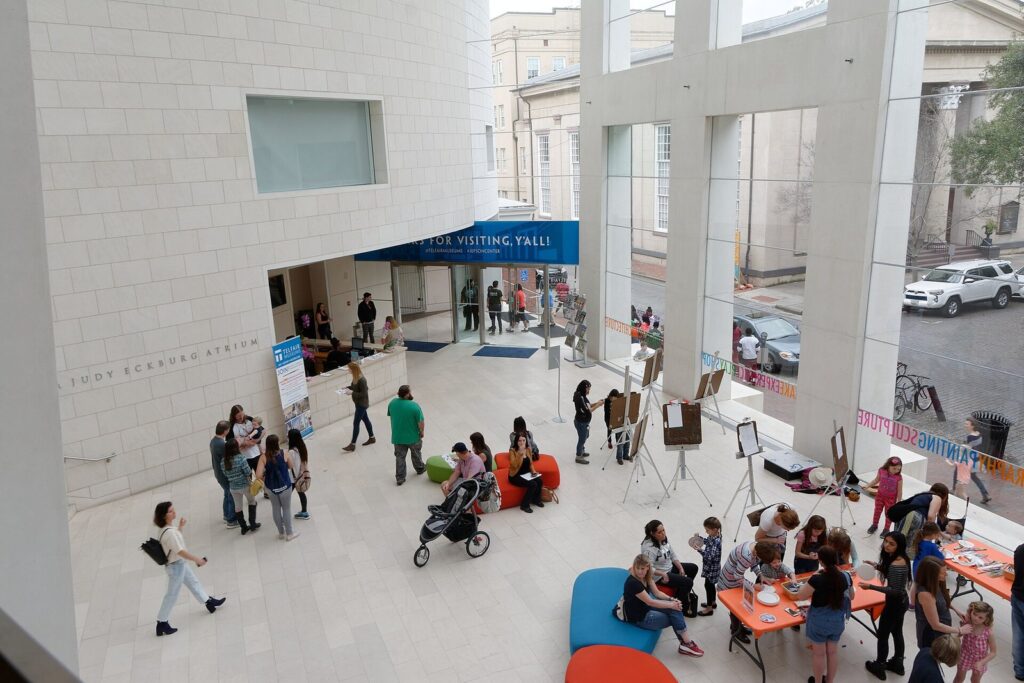
| Jepson Center (Telfair Museums) | Yes | Elevator to all three levels; wheelchair entrance to the right of the main York Street entrance; free wheelchairs at the checkroom when available |
| Juliette Gordon Low Birthplace | Yes | Full elevator access, with a street-level entrance through the garden |
| American Prohibition Museum | Yes | Fully ADA compliant, with an elevator |
| National Museum of the Mighty Eighth Air Force | Yes | Fully wheelchair accessible |
| Cathedral Basilica of St. John the Baptist | Yes | Elevator on Harris Street |
| Tybee Island Marine Science Center | Yes | Ramp and elevator |
| Ships of the Sea Maritime Museum | Partly | Gardens accessible and a lift to the main floor; upper floors by stairs only |
| Davenport House | Partly | Three sets of curved stairs and no elevator; the exhibitions are wheelchair accessible |
| Fort Pulaski National Monument | Partly | Casemates have ramps; the upper level is steep stairs only |
| Owens-Thomas House & Slave Quarters | No | Original staircases and no elevator |
| Andrew Low House | No | Not ADA compliant; can’t accommodate wheelchairs |
| Mercer Williams House | No | Not licensed as handicap accessible |
| Flannery O’Connor Childhood Home | No | Not wheelchair accessible |
| Tybee Island Light Station | No, for the climb | 178 steps with a landing every 25; no elevator |
A few patterns stand out. Newer and purpose-built museums, like the Jepson Center and the Mighty Eighth, are fully accessible, and the Mighty Eighth, which suggests two to two and a half hours, makes a good choice for a hot or rainy day. The American Prohibition Museum is a compact, step-free 45 to 60 minutes. Historic houses are the hardest, though the Davenport House’s exhibitions and Ships of the Sea’s gardens and main floor are accessible even where the upper floors aren’t. If the stairs rule out the Owens-Thomas House, the Jepson Center, covered by the same $30 Telfair ticket, is the fully accessible way to use it. For the attractions themselves, with prices and hours, see our guide to Savannah’s top attractions.
Getting Around: Surfaces, Curb Cuts and Slopes
The good news first: the Historic District sits on a flat bluff, laid out on a regular grid, and Visit Savannah points out that the flat terrain makes getting around easier. The squares break up the blocks every few hundred feet, which means frequent benches and shade. The hard parts are the surfaces, and they change block by block.
Sidewalks and Squares
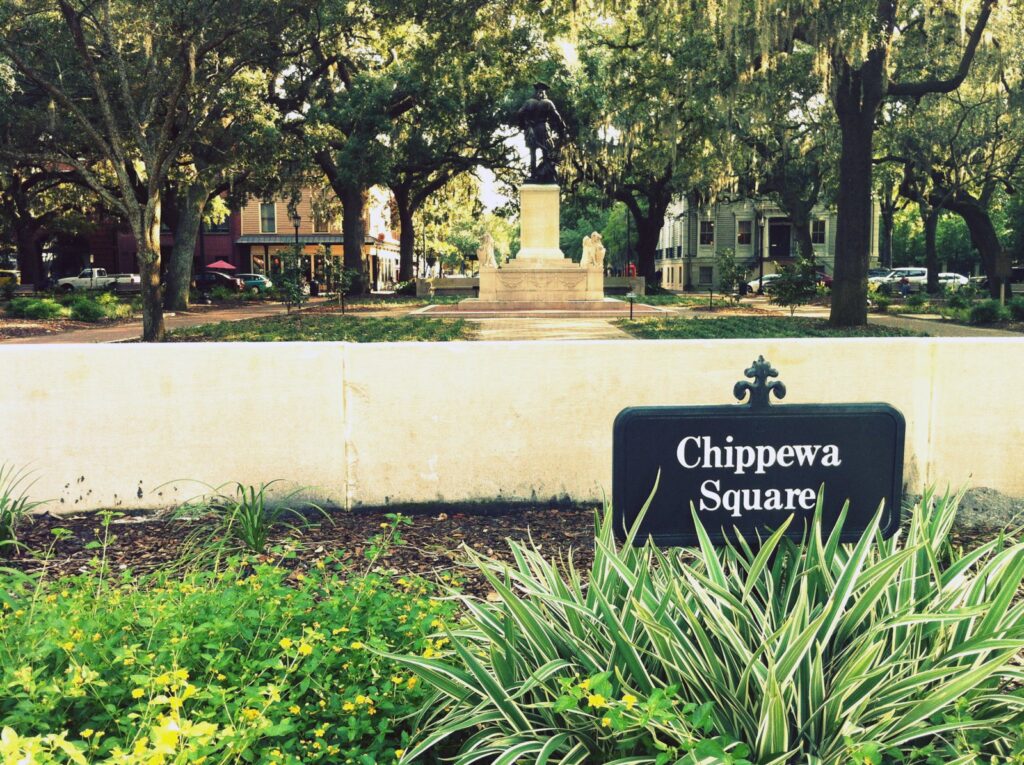
Downtown sidewalks are a mix of concrete, brick and old paving, and live oak roots have lifted slabs in many places. Many corners around the squares have curb cuts, but not every one, and some paths through the squares are brick or packed sand, which is harder going for narrow front wheels than concrete. The narrow lanes behind the houses are often brick, gravel or broken pavement, so avoid them as shortcuts. A good rule: stick to the asphalt streets and the concrete sidewalks where you can, and treat cobblestones as a detour, not a route. Broughton Street, the main shopping street, and the paved walks of Forsyth Park are usually among the easier places to roll.
River Street
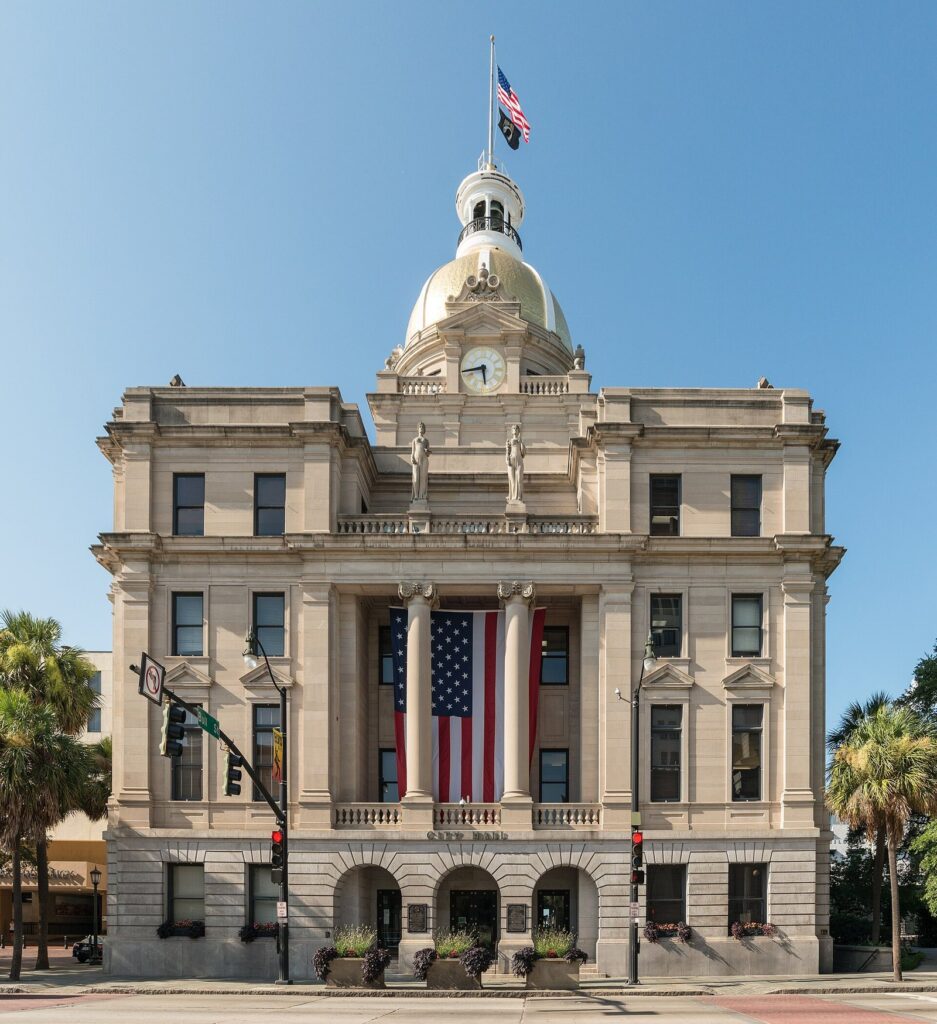
River Street is the steepest and roughest part of downtown. The street and most of its ramps down from Bay Street (at Barnard, Bull, Abercorn and Lincoln streets) are cobblestone, and the old stairs are steep. The step-free way down is one of the two public outdoor elevators: one between the Hyatt at 2 W. Bay Street and City Hall at 2 E. Bay Street, and one at The Alida hotel at 412 Williamson Street, at the west end. Plan to go down one and back up the same way, since the cobbles between them are hard work.
A Step-Free Route Through the Historic District
For a first loop, this route keeps to the smoother surfaces and passes restrooms and seating along the way:
- Start at Ellis Square, which has public restrooms, seating and a visitor center, beside City Market.
- Head east on Broughton Street for shops and Leopold’s Ice Cream.
- Turn south on Bull Street and follow it through Wright, Chippewa, Madison and Monterey squares, with benches in each.
- Finish at Forsyth Park, with its paved walks and the fountain at the north end.
The walk down Bull Street from Broughton to the top of Forsyth Park is roughly a mile, with a square, benches and shade every couple of blocks, so it breaks naturally into short stages. For River Street, add the elevator beside City Hall, at the north end of Bull Street. The free DOT Express Shuttle covers the same ground if you’d rather ride part of it. Our Historic District guide covers what’s on each square.
Accessible Transportation
- DOT Express Shuttle: free, ADA compliant, two loops with 18 stops about every 10 minutes; weekdays 7am-7pm, weekends 10am-6pm, holidays 10am-6:30pm; no service on Thanksgiving, Christmas or New Year’s Day.
- CAT buses: every bus kneels and has a ramp.
- CAT Mobility paratransit: visitors can ride with documentation that their home transit provider has found them ADA eligible, or documentation of residence and disability. Book 1-7 days ahead (by 4pm for next-day trips); the fare is $1.80 per boarding, and personal care attendants ride free. Out-of-town riders call (912) 233-5767.
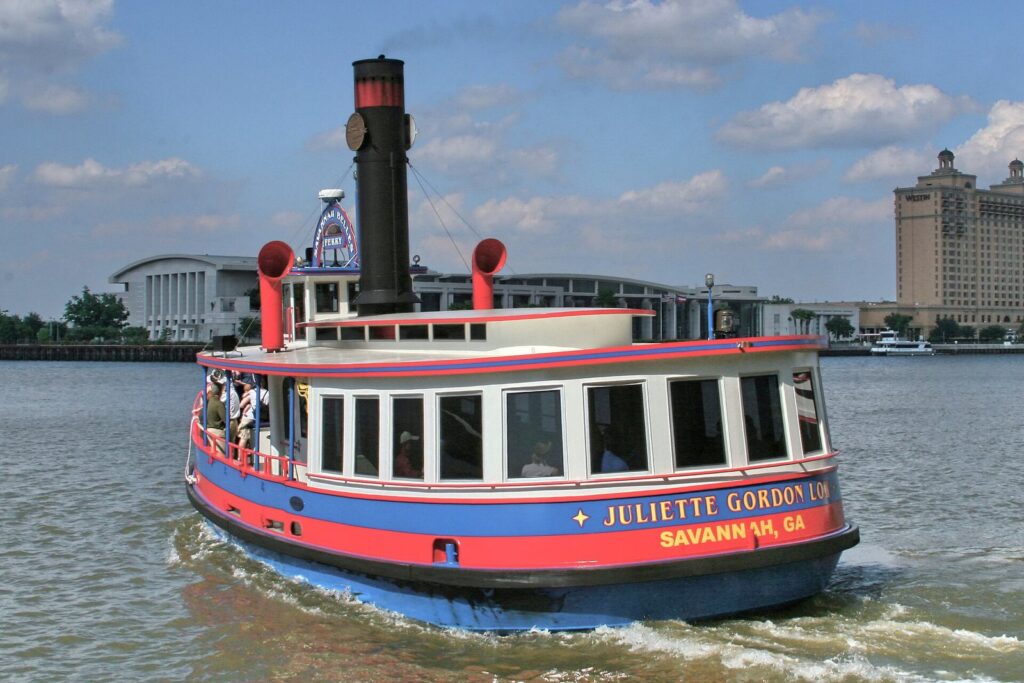
- Savannah Belles Ferry: free and ADA accessible, daily 7am-10pm, between City Hall on the Riverwalk, the Waving Girl landing and Hutchinson Island.
- Old Town Trolley: many trolleys have wheelchair lifts with 24 hours’ notice at (912) 233-0083; wheelchair boarding is only at Stop 9, the Welcome Center. Its Ghosts & Gravestones night tour isn’t accessible.
- Old Savannah Tours: many trolleys have motorized wheelchair lifts, with 24 hours’ notice at 855-427-9911.
- Taxis and rideshares: wheelchair-accessible vehicles are limited, so request one well ahead and confirm the booking.
- From the airport: rideshare pickup is at the north entrance of baggage claim, taxis are metered, and nine rental-car companies are in baggage claim. The airport offers special assistance on request.
Driving and parking: City garages are open 24/7 and take cards only. Street meters are enforced Monday to Saturday, 8am-8pm, north of Liberty Street, and Monday to Friday, 8am-5pm, south of it. Disabled parking placards issued by other states are generally honored in the U.S., but the City’s rules on meter time and fees for placard holders aren’t spelled out on its public pages, so call Mobility & Parking Services at (912) 651-6470 before you rely on free parking. Our guide to getting around Savannah has the garage rates and shuttle map.
Mobility equipment: Visit Savannah lists Freedom Mobility Center, a medical equipment provider on US 80 East, for wheelchairs and scooters, and other local companies advertise short-term scooter and wheelchair rentals for visitors. Book ahead and ask about delivery to your hotel.
Accessible Tours
Narrated tours are the easiest way to cover a lot of Savannah without a lot of walking, but access depends on the vehicle and the route:
- Trolley tours: Old Town Trolley and Old Savannah Tours both run trolleys with wheelchair lifts. Give 24 hours’ notice, and remember that Old Town Trolley boards wheelchairs only at its Welcome Center stop.
- Night tours: the Ghosts & Gravestones trolley has no wheelchair lifts, and its stops involve stairs and cobblestones. Walking ghost tours typically cover about a mile of brick sidewalks after dark.
- Other tours: Visit Savannah lists Adventure Tours in Motion (Segway and e-bike tours), Savannah Bike Tours and the SCADstory experience among tours offering accessible experiences. Ask each what that means for your needs.
- Wormsloe: the free narrated trolley along the oak avenue runs every 30 minutes, so you can see the site without walking it.
Questions to Ask Before You Book
“Accessible” means different things to different operators, so ask the specific questions that matter to you. These cover most needs:
- Entrances: Is there a step-free entrance, and is it the main door or a side door? Is there a ramp, and how steep is it?
- Inside: Is there an elevator to every floor you need, and how big is it? How wide are doorways and aisles?
- Restrooms: Is there an accessible restroom, and on which floor?
- Seating: Can you sit during a tour or performance, and are there benches along the way?
- Notice: Does a wheelchair lift, interpreter or other accommodation need advance notice? The trolley companies, for example, need 24 hours.
- Surfaces: Does a walking tour cross cobblestones, gravel or sand, and how far does it go?
- Tickets: Is there a companion or personal care attendant policy? CAT Mobility, for one, carries attendants free.
- Cancellation: If access turns out to be impossible on the day, can you get a refund?
Restrooms, Seating and Rest Stops
Finding a restroom is one of the most common problems downtown, so plan your stops:
- Ellis Square has public restrooms beside its visitor center.
- The visitor information centers at City Market (307 W. Julian St., daily 10am-5pm) and on River Street (1 W. River St., daily 10am-6pm) are reliable stops.
- Forsyth Park has restrooms at the south end, near the cafe.
- Museums with elevators, like the Jepson Center, have restrooms inside, available with admission.
- Tybee Island has restrooms at the Pier and Pavilion, at North Beach Plaza and at Memorial Park on 4th Street.
Seating is easier. Every square has benches under the oaks, and the squares come every couple of blocks along the main north-south streets, so you’re rarely far from a place to rest. In summer, pause in the shade rather than the sun; the difference in temperature under the oaks is real.
Eating Out
Many of Savannah’s best-loved restaurants occupy old houses and cotton warehouses, and that shows in the access. Expect a step or two at many historic entrances, restrooms up or down a flight of stairs, and narrow spaces between tables. Newer developments, such as the Plant Riverside District at the west end of River Street, tend to be easier, and its Generator Hall, with a 135-foot dinosaur and a fossil display, is free to walk through.
Call ahead and ask three things: whether the entrance is step-free, where the accessible restroom is, and whether they can hold a table with room to maneuver. Booking an early table, before the dinner rush, makes all three easier to arrange. Our list of the best restaurants in Savannah notes which places take reservations.
Accessible Hotels
Visit Savannah features Planters Inn on Reynolds Square, the DoubleTree by Hilton Savannah Historic District, the AC Hotel Savannah Historic District and The Westin Savannah Harbor Golf Resort & Spa among its accessible hotel options. The Westin sits on Hutchinson Island, across the river, with its own landing on the free Belles Ferry. The ferry is ADA accessible and runs from 7am to 10pm, so plan evenings downtown to end before the last boats.
Whatever you book, ask the hotel directly for what you need: a roll-in shower or tub with grab bars, door widths, bed height, an elevator to your floor and the distance from the accessible entrance to your room. Historic inns in converted mansions are beautiful but often have stairs, narrow doors and no elevator, so confirm before you pay. Newer hotels usually make it simpler. Our guide to where to stay in Savannah compares the neighborhoods.
Seniors and Visitors With Limited Mobility
Savannah rewards a slower pace, and many attractions offer senior prices:
| Attraction | Senior price |
|---|---|
| Telfair Museums (three sites, seven days) | $27 (65+) |
| National Museum of the Mighty Eighth Air Force | $12 (60+) |
| Andrew Low House | $14 (60+) |
| Ships of the Sea Maritime Museum | $14.50 (65+) |
| Juliette Gordon Low Birthplace | $12 |
| Tybee Island Light Station | $12 (62+) |
| Oatland Island Wildlife Center | $5 (65+) |
| Coastal Georgia Botanical Gardens | $6 (65+) |
| Ralph Mark Gilbert Civil Rights Museum | $8 |
The best way to see a lot without a lot of walking is a narrated trolley: Old Savannah Tours runs a 75-minute nonstop loop, and Old Town Trolley’s hop-on, hop-off route lets you rest between stops. At Wormsloe, a free narrated trolley runs the 1.5-mile oak avenue every 30 minutes, and the site lists an all-terrain track chair. Plan outdoor time for mornings from June to September, when highs average around 90°F. Choose a hotel near a DOT Express Shuttle stop so you can ride instead of walking back in the heat, and build a rest into the middle of every day. If a horse-drawn carriage ride is on your list, book a morning or evening slot: the City stops carriage tours at 85°F or a 100°F heat index. For tour options, see our guide to the best Savannah tours.
Beaches and the Outdoors
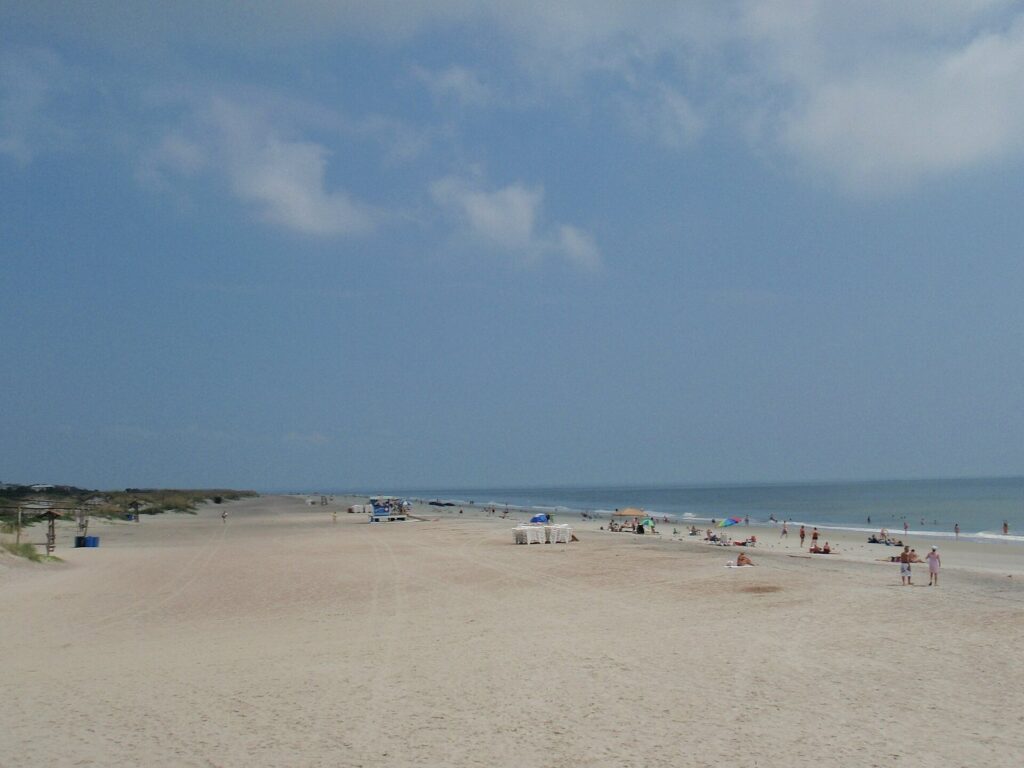
Tybee Island lends free fat-tire beach wheelchairs, first come, first served, and will deliver them anywhere on the island; call (912) 472-5089 and bring photo ID. The Tybee Island Marine Science Center has a ramp and elevator. Inland, the Savannah National Wildlife Refuge’s 4.5-mile wildlife drive is seen from your car, Skidaway Island State Park’s Sandpiper Trail, about a mile long, uses boardwalks designed for access, and Fort Pulaski’s casemates have ramps. On Tybee, the North Beach lot at 37 Meddin Drive sits next to the Marine Science Center, with restrooms at North Beach Plaza, which makes it the simplest base for a beach visit. Our guides to Tybee Island and to the outdoors around Savannah cover conditions and closures.
Visitors Who Are Deaf, Hard of Hearing, Blind or Low Vision
Much of Savannah’s sightseeing is narrated, from trolley tours to house museums, so ask ahead about written materials. Many museums can provide printed guides or transcripts, and some tours can arrange interpreters with notice. Outdoors, the squares’ regular grid makes the Historic District easier to learn than most old cities: streets run north-south and east-west, and the squares repeat at predictable intervals along the main streets. Uneven sidewalks and tree roots are the main hazard for visitors with low vision, especially at night.
Sensory-Friendly and Low-Stimulation Savannah
Savannah can be loud and crowded at certain times and wonderfully quiet at others. For a low-stimulation visit:
- Go early and midweek. The squares and museums are calmest on weekday mornings.
- Know the loud times. St. Patrick’s week, festival weekends, and Friday and Saturday nights on River Street and around City Market are the busiest and noisiest. Fireworks are common around the Fourth of July and New Year’s Eve.
- Choose calm places. Bonaventure Cemetery (free, 8am-5pm), Wormsloe’s oak avenue, the Coastal Georgia Botanical Gardens and the wildlife refuge’s drive are quiet, open and slow.
- Pick tours carefully. Night ghost tours can be intense and crowded; a daytime narrated trolley or a museum visit is gentler.
- Use the ferry as a reset. A free ride across the river and back is a quiet break on the water.
- Pack for noise. Noise-reducing headphones make parades, River Street at night and crowded restaurants much easier.
Our guide to Savannah with kids covers closure days and quieter family options too.
Service Animals and Dogs
Under the Americans with Disabilities Act, trained service animals can accompany their handlers in public places, including restaurants, hotels and museums. Pets are another matter, and the rules vary:
- Tybee beaches and crossovers: no dogs or other pets, with service animals excepted.
- Coastal Georgia Botanical Gardens: no pets, except service animals.
- Oatland Island Wildlife Center: no pets.
- Savannah National Wildlife Refuge: pets stay in the vehicle.
- Fort Pulaski: pets on a 6-foot leash.
- Savannah Belles Ferry: leashed dogs ride along.
- Bonaventure Cemetery: leashed pets on the public paths only.
Under the ADA, a business may ask only two questions about a service animal: whether it’s required because of a disability, and what work or task it has been trained to perform. Emotional support animals aren’t service animals under the ADA, so the pet rules above apply to them.
In summer, brick and pavement get hot enough to burn paws, so walk dogs early and late, and carry water for both of you.
Accessibility by Season
| Season | What it means for access |
|---|---|
| Spring (March-May) | Comfortable temperatures, but the heaviest crowds and heavy pollen; St. Patrick’s week closes streets and some attractions |
| Summer (June-August) | Heat and humidity, with highs around 90°F and afternoon storms; plan mornings and air-conditioned afternoons |
| Fall (September-November) | The easiest season overall, especially October and November; hurricane season lasts through November |
| Winter (December-February) | Cool and quiet, with the fewest crowds; the best time for long, slow walks |
For the full seasonal picture, see our guide to the best time to visit Savannah.
Traveling With Medical Equipment
If you travel with oxygen, a power chair or other equipment, tell your airline and hotel in advance, and ask the airport for special assistance when you book your flight. Local medical equipment suppliers, including Freedom Mobility Center on US 80 East, can help with repairs or rentals, but call before you arrive rather than after something breaks. Keep a list of your equipment’s model numbers and your doctor’s contact details with you.
Day Trips and Access
Beyond the city, access varies as much as it does downtown. Fort Pulaski’s casemates have ramps, though its upper level is stairs only. On Jekyll Island, flat, paved bike paths make getting around easier, while the Hunting Island Lighthouse in South Carolina requires climbers to be at least 44 inches tall and under 260 pounds. Ferry islands like Cumberland involve docks, boats and sand, so call the ferry operator about boarding before you book. Our guide to the best day trips from Savannah covers each trip’s logistics.
LGBTQ+ Travelers
Savannah has a visible LGBTQ+ community and an annual Pride festival, organized by the Savannah Pride Center. The 2026 festival, listed as the 27th, is set for Saturday, October 24, in Forsyth Park, with free entry to the main festival. The Pride Center is the best local resource for current events and community spaces. The Historic District, home to the large student body of the Savannah College of Art and Design, is generally relaxed and cosmopolitan, and same-sex couples holding hands on Broughton Street won’t turn heads. For the rest of the calendar, see our guide to Savannah events and festivals.
Solo Travelers
The Historic District is compact and walkable, which makes it an easy city to explore alone. Stick to well-lit, busier streets at night; Broughton Street, the main squares and River Street are rarely empty in the evening. Note that the free DOT shuttle stops at 7pm on weekdays and 6pm on weekends, so plan a rideshare or a short walk for later. An evening ghost tour or a food tour is an easy way to spend a night in company. At the airport, use the designated rideshare pickup at the north entrance of baggage claim or the metered taxi line. For day trips beyond the city, which need a car, tell someone your route and when you expect to be back, and keep an eye on ferry schedules if you’re heading to an island. The visitor information centers at City Market and on River Street are good places to ask questions in person.
Sober and Alcohol-Free Savannah
Savannah’s open-container culture is real: within the downtown to-go zone, from the river south to Jones Street, adults can carry one drink each in a cup of 16 ounces or less. If you’re not drinking, that doesn’t have to shape your trip. Morning is the city’s quietest time; museums, house tours, the ferry, the farmers’ market and Leopold’s Ice Cream make a full day without a bar in sight, and the Ghosts & Gravestones trolley tour bans alcohol entirely. The one time to think twice is the afternoon of St. Patrick’s Day, when River Street and City Market become one long party. Festivals don’t have to revolve around drinks either: the Savannah Book Festival’s free Festival Saturday and the free Savannah Jazz Festival in Forsyth Park are relaxed daytime events, and most bars and restaurants now offer alcohol-free cocktails if you ask.
International Visitors
- Temperatures are in Fahrenheit: the average July high of 92.3°F is about 33.5°C, and January’s 61.4°F is about 16°C.
- Taxes are added at the register, not included in posted prices. Hotel bills add the City’s 8% hotel-motel tax, sales tax and Georgia’s $5 per-night state fee.
- Tipping is expected in the U.S.: roughly 18-20% at sit-down restaurants, and a few dollars for bartenders, porters and guides.
- Two states: Savannah is in Georgia, but Hilton Head, Beaufort and Charleston are across the river in South Carolina, with their own rules.
- Emergencies: call 911. During hurricane threats, follow Chatham County’s emergency agency, CEMA, which issues alerts visitors can sign up for.
- Getting here: Savannah/Hilton Head International Airport is closest; many international travelers connect through a larger U.S. hub first.
- Measurements and money: distances are in miles (a mile is about 1.6 kilometers), cards are accepted almost everywhere, and the legal drinking age is 21, including for the downtown to-go cups.
For the full overview of planning a trip, see our Savannah travel guide.
Where to Get Help
| For | Contact |
|---|---|
| Paratransit for visitors (CAT Mobility) | (912) 233-5767 |
| Parking questions, visitor passes and placards | City Mobility & Parking Services, Bryan Street Garage, (912) 651-6470 |
| Old Town Trolley wheelchair lift (24 hours’ notice) | (912) 233-0083 |
| Old Savannah Tours wheelchair lift (24 hours’ notice) | 855-427-9911 |
| Tybee Island beach wheelchairs | (912) 472-5089 |
| In-person advice | Visitor information centers at City Market (307 W. Julian St.) and on River Street (1 W. River St.) |
| Storm and evacuation alerts | Chatham Emergency Management Agency (CEMA) |
Accessible Savannah FAQ
Is Savannah wheelchair accessible?
Largely, with planning. The Historic District is flat, the free DOT Express Shuttle, CAT buses and Belles Ferry are accessible, and museums such as the Jepson Center, the Mighty Eighth and the American Prohibition Museum are step-free. But many historic houses have no elevator, River Street is cobblestone, and sidewalks can be uneven.
How do you get down to River Street in a wheelchair?
Use one of the two public outdoor elevators: one between the Hyatt at 2 W. Bay Street and City Hall at 2 E. Bay Street, and one at The Alida at 412 Williamson Street. The ramps down from Bay Street are steep cobblestone, and River Street itself is cobbled, so plan a short stretch.
Which Savannah house museums are wheelchair accessible?
The Juliette Gordon Low Birthplace has full elevator access with a street-level garden entrance. The Davenport House’s exhibitions are accessible but its upper floors aren’t. The Owens-Thomas, Andrew Low, Mercer Williams and Flannery O’Connor houses aren’t wheelchair accessible, according to their operators.
Can visitors use paratransit in Savannah?
Yes. CAT Mobility accepts visitors who bring documentation of ADA eligibility from their home transit provider, or documentation of residence and disability. Book one to seven days ahead, by 4pm for next-day trips. The fare is $1.80 per boarding, and personal care attendants ride free. Call (912) 233-5767.
Are Savannah trolley tours wheelchair accessible?
Some are. Old Town Trolley and Old Savannah Tours have trolleys with wheelchair lifts, but both need 24 hours’ notice, and Old Town Trolley boards wheelchairs only at its Welcome Center stop. The Ghosts & Gravestones night tour has no wheelchair lifts.
Can you get a beach wheelchair on Tybee Island?
Yes, free. The City of Tybee Island lends fat-tire beach wheelchairs on a first-come, first-served basis and delivers them anywhere on the island. Call (912) 472-5089 and have photo ID ready.
Are dogs allowed on Tybee beaches?
No. Dogs and other pets aren’t allowed on Tybee’s beaches or crossovers, though service animals are exempt. For dog-friendly outings, try Fort Pulaski (pets on a 6-foot leash) or a ride on the Belles Ferry, which allows leashed dogs.
Related Savannah Guides
- Getting Around Savannah: the shuttle, ferry, buses, garages and meters.
- Savannah Attractions: prices, hours and time needed for each site.
- Where to Stay in Savannah: neighborhoods and hotel types.
- Best Savannah Tours: trolley, walking and boat tours compared.
- Tybee Island Travel Guide: beaches, parking and the beach-wheelchair program.
- Outdoors, Nature, and Wildlife: trails, boardwalks and the wildlife drive.
Sources and How We Checked
Details were checked September 23, 2026. This guide is compiled from the attractions, transit agencies and public authorities listed below, not from other travel lists, and it doesn’t claim first-hand visits. Accessibility details are as each operator reports them; conditions change, so call ahead.
- Visit Savannah: Savannah’s accessibility; visitor information centers
- Chatham Area Transit: CAT Mobility paratransit; DOT Express Shuttle; Savannah Belles Ferry
- City of Savannah: parking meters; parking garages; Ellis Square; City Code, to-go cups; hotel-motel tax
- Waterfront: Savannah’s Waterfront, getting here (River Street elevators)
- Attractions: Telfair Museums accessibility; Juliette Gordon Low Birthplace accessibility; American Prohibition Museum; Mighty Eighth Air Force Museum; Cathedral Basilica; Ships of the Sea; Davenport House; Andrew Low House; Mercer Williams House; Flannery O’Connor Childhood Home; Fort Pulaski accessibility
- Tours: Old Town Trolley accessibility; Old Savannah Tours
- Tybee Island: City of Tybee Island beach wheelchairs; beach rules; Tybee Island Marine Science Center; Tybee Island Light Station
- Other: Savannah/Hilton Head International Airport; Georgia State Hotel-Motel Fee; Savannah Pride Center; Coastal Georgia Botanical Gardens; Freedom Mobility Center
Savannah Tourism Guide is an independent publication. We are not affiliated with Visit Savannah, the City of Savannah or any attraction listed here, and no one paid to be included.
Photo Credits
- Jepson Center lobby: photo by Jud McCranie, Wikimedia Commons (CC BY-SA 4.0)
- Chippewa Square: photo by Alecconnell, Wikimedia Commons (CC BY-SA 3.0)
- Savannah City Hall: photo by DXR, Wikimedia Commons (CC BY-SA 4.0)
- Savannah Belles Ferry: photo by Cliff from Arlington, Virginia, USA, Wikimedia Commons (CC BY 2.0)
- Tybee Island beach: photo by XeresNelro, Wikimedia Commons (CC BY-SA 4.0)