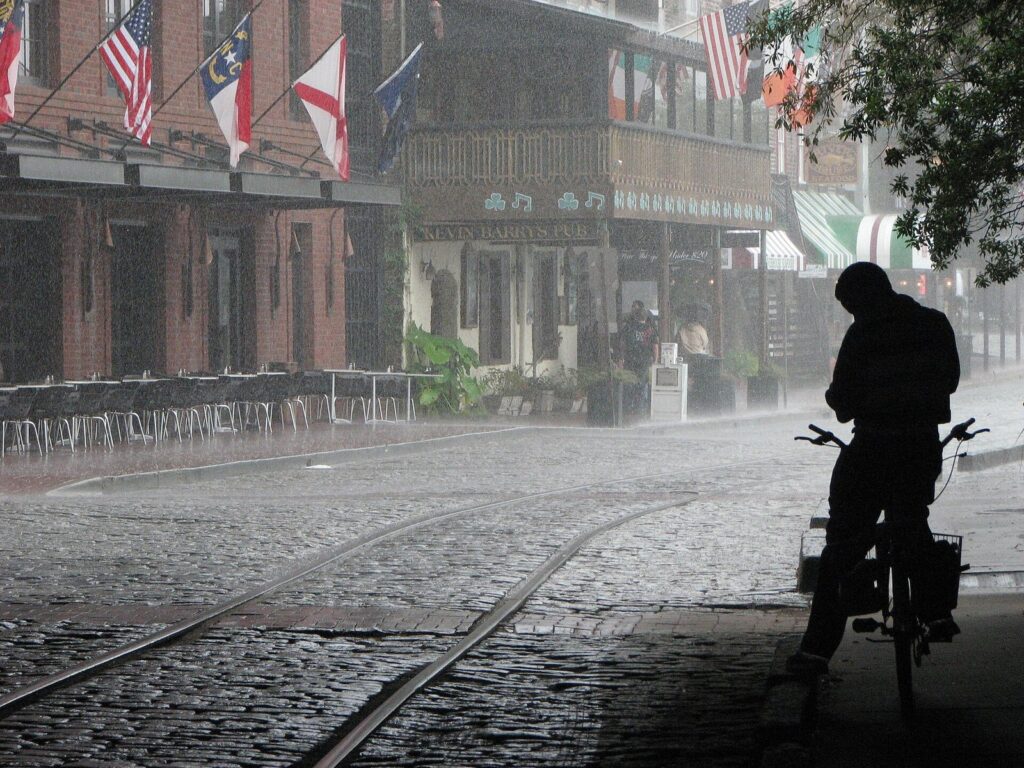
This River Street visitor guide covers Savannah’s riverfront: roughly a mile of cobblestone street below the Bay Street bluff, from the Plant Riverside District in the west to the Waving Girl statue in the east, lined with 19th-century cotton warehouses that now hold shops, restaurants and bars. Container ships slide past close enough to make everyone stop and stare. It’s free and always open. Plan an hour or two for a walk with a few stops, or an evening for golden hour, the free ferry and a drink by the water.
This guide is for first-time visitors and anyone who wants River Street at its best rather than at its most crowded. Two caveats matter. First, getting down the bluff means steep ramps, old stone stairs or one of two public elevators. Second, Friday and Saturday nights are loud. Access, transit, parking and event details were checked October 1, 2026 against official sources. For the rest of the city’s landmarks, see our guide to Savannah attractions.
River Street at a Glance
| Question | Short answer |
|---|---|
| Cost | Free to walk; shops, bars and cruises set their own prices |
| Time needed | 45 minutes for a quick look; 2 to 3 hours for the whole riverfront; an evening for dinner and the ferry |
| Best time | Early morning for quiet and photos; 6pm to dusk for light and atmosphere; weeknights for a calmer evening |
| Getting down from Bay Street | Elevators between the Hyatt Regency and City Hall and at The Alida; cobblestone ramps at Barnard, Bull, Abercorn and Lincoln streets; stone stairs |
| Free transit | The Savannah Belles Ferry, daily 7am to 10pm, and the DOT Express Shuttle around the district |
| Parking | City garages a block or two up the bluff, from $2 an hour |
| Visitor center | 1 West River Street, daily 10am to 6pm |
| Drinks | To-go cups are legal on River Street |
A Short History of the Riverfront
River Street exists because of trade. From 1798 the City developed wharf lots along the river, and over the following decades the bluff was cut back for ramps down to the water. Warehouses rose against the bluff, their lower floors opening onto the river and their upper floors onto Bay Street, connected by the iron walkways and bridges you still cross on Factors Walk, the passage between the bluff and the warehouse fronts. By 1846 the City required stone construction, and builders used discarded ballast stones from trading ships. The ramps were paved and retaining walls built in the mid-1800s to hold back erosion, and the stone stairs date from the same era.
The commodity was cotton, and the men who brokered it were called cotton factors, which is where Factors Walk gets its name. That wealth rested on slavery: the cotton that crossed these wharves was planted and picked by enslaved people on plantations across Georgia and the South, and in 1860 more than a third of Savannah’s own population was enslaved. When the cotton economy faded, the warehouses emptied, and the riverfront’s revival as a visitor district came much later. Keep that history in mind as you walk; the African-American Monument on the riverfront asks you to.
What to See on River Street, West to East
Plant Riverside District
The west end of River Street is anchored by the Plant Riverside District, a former power plant turned into a hotel, dining and entertainment complex. Anyone can walk through Generator Hall, with its giant dinosaur skeleton, fossils and minerals, and stroll the district’s quarter-mile stretch of riverwalk. The JW Marriott Savannah Plant Riverside District has about a dozen bars and restaurants, including a rooftop lounge over the river, and the District Live venue stages ticketed concerts. It feels newer and more polished than the rest of River Street, which is either its appeal or its drawback, depending on what you came for.
City Hall, the visitor center and Rousakis Riverfront Plaza
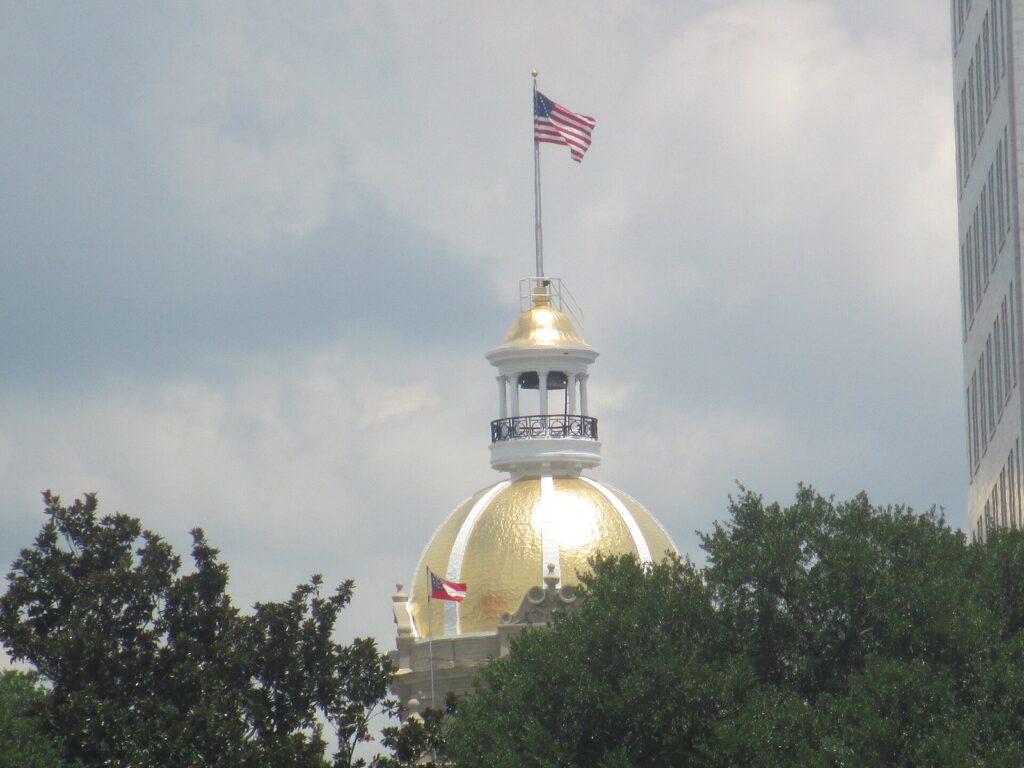
The middle of the riverfront sits below City Hall and its gilded dome on Bay Street. This is the easiest place to start. A public outdoor elevator between the Hyatt Regency and City Hall brings you down to the river, the River Street Visitor Information Center at 1 West River Street is open daily from 10am to 6pm, and the Savannah Belles Ferry leaves from the City Hall landing. Rousakis Riverfront Plaza, the broad open stretch along the water here, is where crowds gather for festivals and fireworks.
The African-American Monument
On the riverfront stands the African-American Monument, a bronze by sculptor Dorothy Spradley of a family of four in modern dress, with broken chains at their feet. Its stone base is carved with waves, shackled hands and a quotation from Maya Angelou. Standing on the same waterfront that carried the cotton trade, it’s one of the most important things on River Street, and it deserves a few quiet minutes rather than a passing photo.
Factors Walk and the warehouses
Look up from the riverfront and you’ll see the warehouse fronts climbing several stories to the bluff, laced with iron balconies and bridges. Take one of the ramps or stairs up into Factors Walk, the narrow cobbled passage between the bluff and the buildings, to see how the levels connect. It’s the most atmospheric corner of River Street, especially in the morning before the shops open.
The shops, galleries and candy
Most of River Street’s ground floors are shops, galleries, restaurants and bars. The candy shops are the classic stop: River Street Sweets’ flagship at 13 East River Street opens daily from 9am, until 10pm Sunday to Thursday and 11pm Friday and Saturday, and Savannah’s Candy Kitchen has a store on River Street too. Pralines are the thing to buy. Beyond the candy, expect a lot of T-shirts and souvenirs, a few galleries worth browsing, and the occasional good find among the tourist stock.
Morrell Park, the Waving Girl and the Olympic Cauldron
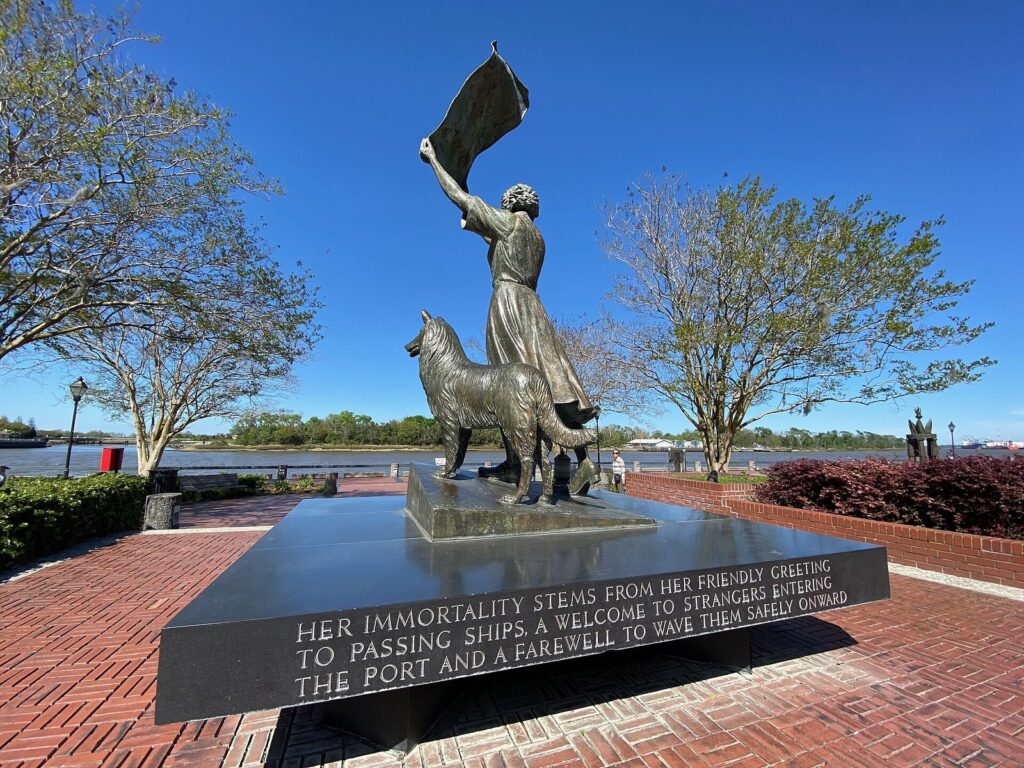
At the east end, Morrell Park holds River Street’s best-loved statue. The Waving Girl, by Felix de Weldon, the sculptor of the Marine Corps War Memorial, depicts Florence Martus, who greeted ships entering and leaving the port from 1887 to 1931, waving a cloth by day and a lantern by night. Ships answered with their whistles, as the story goes, and the legend that she never missed one has grown with every retelling. The City voted in 2019 to move the statue to the west end, but the move was put on hold in January 2020, and she’s still here.
Nearby, the Olympic Cauldron recalls the 1996 Atlanta Olympics, whose sailing events were held off the Savannah coast. Morrell Park is greener and quieter than the middle of River Street, and the Waving Girl ferry landing is right beside it.
Eastern Wharf
Keep walking east along the Riverwalk and you reach Eastern Wharf, a 54-acre development of parks, shops, restaurants and homes billed as an extension of River Street. The Park at Eastern Wharf, a riverfront green beside the Thompson Savannah hotel, is the calmest place on the waterfront for a sit, and the hotel’s rooftop Bar Julian is a sunset option.
Ships, the Ferry and Getting on the Water
Watch the ships. The Port of Savannah’s container ships pass right in front of River Street on their way to and from the terminals upriver, and they’re enormous at this range, often towering over the warehouses. They come and go through the day and night; when you hear a deep horn, look up.
Ride the free ferry. The Savannah Belles Ferry, run by Chatham Area Transit, crosses to Hutchinson Island daily from 7am to 10pm, with landings at City Hall, at the Waving Girl in Morrell Park and at the Westin and Convention Center across the river. It’s fare-free and ADA accessible, and bikes, luggage and leashed dogs ride too. The posted schedule shows City Hall departures every 20 to 30 minutes, and the Waving Girl landing is served only from about 8:20am to 6:20pm, so after that, board at City Hall. The ride is short, and the view back at the warehouses and the dome is the best one in town. The ferry doesn’t run on Thanksgiving, Christmas or New Year’s Day.
Take a harbor cruise. For longer on the water, Savannah Riverboat Cruises runs a 1.5-hour narrated harbor sightseeing cruise for $37.95 per adult, $24.95 for ages 5 to 12 and free for under-5s. Our Savannah tours guide compares it with the city’s other tours.
Eating and Drinking on River Street
River Street has dozens of restaurants and bars, from seafood houses such as The Shrimp Factory to pubs like Broken Keel. The honest verdict: you’re paying for the setting. Many visitors do best with a drink or an early bite by the water at golden hour and dinner a few blocks inland, where Savannah’s most talked-about kitchens are. Our guide to the best Savannah restaurants for first-time visitors covers where to book.
Savannah’s to-go cup rules apply here: you can carry an alcoholic drink in a to-go cup within a zone that runs from the river south to Jones Street, west to the Talmadge Bridge and east past Savannah River Landing. That’s why River Street feels like one long outdoor bar on a Saturday night. For a quieter drink with a view, try the rooftops at Plant Riverside or Eastern Wharf.
Getting Down to River Street, and Back Up
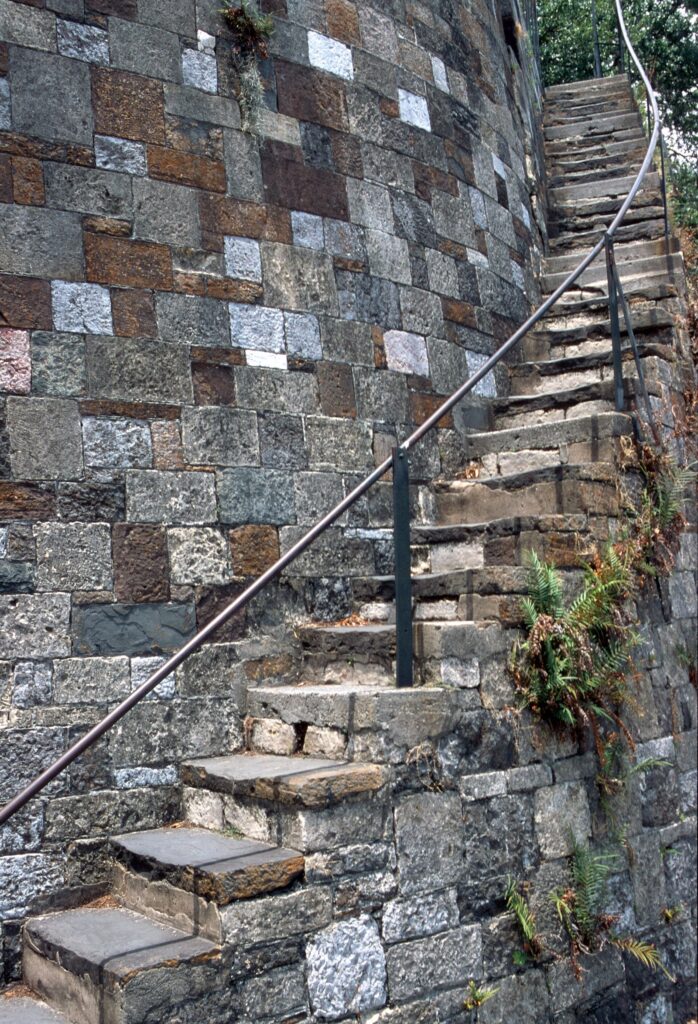
River Street sits at the foot of a bluff, and the climb is the part visitors underestimate. You have three choices:
- Elevators. Two public outdoor elevators link Bay Street and River Street, one between the Hyatt Regency and City Hall and one at The Alida hotel at the west end. They’re the only step-free routes and the best choice with a stroller, a wheelchair or tired legs.
- Ramps. Cobblestone ramps run down from Bay Street at Barnard, Bull, Abercorn and Lincoln streets. They’re steep, uneven and slippery when wet, so take them slowly.
- Stairs. The old stone stairs, built in the mid-1800s, are steep, narrow and worn, with high risers. They’re the quickest way and the most memorable, but skip them in sandals or heels, and hold the rail.
On River Street itself, the cobblestones and old rail tracks make wheels and thin heels hard going. The smoother brick walk along the riverfront is the easier route.
Parking and Transit
Parking. River Street’s own curbside spaces fill fast. The City’s garages up the bluff are open 24 hours and take cards only. The Bryan Street Garage charges $2 an hour with a $20 weekday maximum and a $5 flat rate at weekends; the Whitaker Street Garage under Ellis Square charges $2 an hour, up to $24 on weekdays and $10 at weekends; and the Eastern Wharf garage, handy for the east end, has the same rates as Whitaker. Expect about $25 on special-event days. The City’s Visitor Day Pass covers on-street meters for $15 for 24 hours or $24 for 48, but not garages.
Transit. The free DOT Express Shuttle runs two loops through the Historic District about every 10 minutes, from 7am to 7pm on weekdays and 10am to 6pm at weekends. The Belles Ferry serves hotels on Hutchinson Island. From Forsyth Park, River Street is about a mile north, a 20 to 25-minute walk down Bull Street. Our guide to getting around Savannah and parking has the full picture.
Accessibility
River Street is one of the harder places in Savannah for wheelchair users, but it’s manageable with a plan. Use the elevators rather than the ramps, stick to the riverfront brick walk rather than the cobblestones, and use the Belles Ferry, which is ADA accessible, to cover distance along the water. Some shops sit up a step or two from the street, so access varies building by building. Plant Riverside, at the west end, is newer and generally easier to get around. Our accessible Savannah travel guide covers equipment rental and paratransit.
River Street With Kids
Children tend to love River Street for reasons adults overlook. The container ships are the main event; a big one gliding past at close range beats most attractions. The free Belles Ferry is a boat ride that costs nothing, Generator Hall at Plant Riverside has a dinosaur skeleton you can walk past for free, the Waving Girl comes with a dog and a good story, and the candy shops speak for themselves. A harbor cruise costs $24.95 for ages 5 to 12 and nothing for under-5s. The cautions are practical: use the elevators with a stroller, keep small hands held on the cobblestones and near the water, and plan family time for the day, since the bars set the tone after dark. Our Savannah with kids guide has more ideas.
Photography Tips
- Morning for the buildings. Early light falls on the warehouse fronts and Factors Walk while the street is still empty.
- The ferry for the skyline. The best view of the warehouses and City Hall’s gold dome is from the water, and the Belles Ferry gets you there free.
- Evening for the river. At sunset, look west toward the Talmadge Bridge and wait for a ship to pass in front of it.
- Factors Walk for texture. The iron bridges, cobbles and old stone walls make the best close-up details on the riverfront.
Safety and Comfort
The hazards on River Street are mostly underfoot and overhead. Cobblestones, steep ramps and worn stairs cause more trouble than anything else, especially in the rain, so wear flat shoes and take your time. There’s little shade along the water, so in summer bring water and avoid the middle of the day. On Friday and Saturday nights the crowds and the drinking build as the evening goes on; keep your belongings close, as you would anywhere busy, and if you’re not there for the party, enjoy the early evening and head inland before late. Around St. Patrick’s Day, the whole waterfront becomes one packed street party.
On a Rainy Day
River Street works better in the rain than most of Savannah’s sights. The warehouse shops and candy stores are all indoors, Plant Riverside’s Generator Hall is a covered walk-through, and the Ships of the Sea Maritime Museum, a few blocks from the west end, is open daily from 10am to 5pm. Just take the elevators rather than the ramps and stairs, which get slick when wet.
When to Go
Morning. Before 10am, River Street belongs to delivery trucks, joggers and photographers. It’s the best time to see the architecture and Factors Walk without crowds.
Afternoon. At 2pm in July, River Street is hot, crowded and sunbaked, with little shade. If you’re here in summer, save it for the evening.
Evening. From about 6pm, the light turns gold, the heat eases and the street comes alive. Weeknights are livelier than mornings but calmer than weekends. Friday and Saturday nights are loud and crowded, which is the point for some visitors and a reason to stay away for others.
Events. The riverfront hosts some of Savannah’s biggest gatherings. On St. Patrick’s Day, the City closes off the River Street and City Market areas; in 2026 the closure started at 6am on the Friday before the parade. In fall, the Savannah Waterfront Association lists events such as Trick or Treat on River Street. Its holiday calendar for 2026 includes the Savannah Christmas Market from November 19 to January 3, the Savannah Lighted Boat Parade on November 28, the Lighted Christmas Street Parade on December 12 and midnight fireworks on New Year’s Eve. River Street has also long staged fireworks on the first Friday of the month; confirm dates with the Waterfront Association before planning around them. Our Savannah events and festivals guide keeps the wider calendar.
Three Ways to Do River Street
| Plan | Time | Route |
|---|---|---|
| The quick look | 45 minutes | Elevator down at City Hall, walk east to the Waving Girl, ferry back from her landing (until about 6:20pm) or walk back |
| The whole riverfront | 2 to 3 hours | Plant Riverside’s Generator Hall, west to east past City Hall, the African-American Monument, Factors Walk, the candy shops, Morrell Park and Eastern Wharf |
| The evening | 3 hours or more | A golden-hour walk, a ferry round trip from City Hall, a drink by the water and dinner inland |
If you’re following our two-day Savannah itinerary, River Street is day one’s evening, after a day in the squares and Forsyth Park.
Nearby Stops
| Stop | From River Street | Why go |
|---|---|---|
| City Market | About 5 minutes up the bluff | Four blocks of restored warehouses with restaurants, galleries and an upstairs art center |
| Johnson Square | About 5 minutes from City Hall | The first square laid out, at the head of Bull Street |
| Ships of the Sea Maritime Museum | A few blocks from the west end | Ship models and gardens; open daily 10am to 5pm, adults $17.50 |
| American Prohibition Museum | In City Market | Open daily 10am to 5pm, tickets from $17.57 |
| Forsyth Park | About a mile south | The fountain, the oak walk and the Saturday market; see our Forsyth Park visitor guide |
River Street FAQ
Is River Street free to visit?
Yes. River Street is a public street, open every day at all hours, with no admission charge. The Savannah Belles Ferry across the river is free too. You only pay for what you buy: food, drinks, candy, souvenirs, a harbor cruise or parking. The River Street Visitor Information Center at 1 West River Street opens daily from 10am to 6pm.
How do you get down to River Street?
Take one of the two public elevators, between the Hyatt Regency and City Hall or at The Alida hotel, or walk down a cobblestone ramp at Barnard, Bull, Abercorn or Lincoln Street, or use the steep stone stairs off Bay Street and Factors Walk. The elevators are the only step-free routes, so use them with a stroller or wheelchair.
Can you drink alcohol on River Street?
Yes, in a to-go cup. Savannah allows open alcoholic drinks in to-go cups within a zone that runs from the river south to Jones Street, west to the Talmadge Bridge and east past Savannah River Landing, so you can carry a drink along River Street and between bars. Forsyth Park and the southern Historic District are outside the zone.
Where should I park for River Street?
In a City garage up the bluff. The Bryan Street Garage charges $2 an hour with a $20 weekday maximum and $5 at weekends; the Whitaker Street Garage under Ellis Square and the Eastern Wharf garage charge up to $24 on weekdays and $10 at weekends. River Street’s own curbside spaces are few and fill quickly.
How much time do you need on River Street?
Forty-five minutes covers a walk from City Hall to the Waving Girl and back. Two to three hours lets you walk the whole riverfront from Plant Riverside to Eastern Wharf with stops for the monuments, Factors Walk and the candy shops. For an evening with the ferry, a drink and dinner, allow three hours or more.
Is River Street worth visiting?
Yes, at the right time. The architecture, the ships, the ferry and the evening light make it one of Savannah’s essential sights. At midday in summer it’s hot and crowded, and its shops lean heavily on souvenirs. Go early for history and photos or around sunset for atmosphere, and eat your main meal inland.
Where is the Waving Girl statue?
In Morrell Park at the east end of River Street, beside the Waving Girl ferry landing. The bronze by Felix de Weldon depicts Florence Martus, who greeted ships entering and leaving the port from 1887 to 1931. The City voted in 2019 to move the statue to the west end, but the plan was put on hold in January 2020.
Related Savannah Guides
- Savannah Attractions and Landmarks: the city’s major sights and how to see them
- Forsyth Park Visitor Guide: the other end of the classic Bull Street walk
- Two Days in Savannah Itinerary: when to fit River Street into a short trip
- Best Savannah Restaurants for First-Time Visitors: dinner after the river
- Best Area to Stay in Savannah for First-Time Visitors: whether a riverfront room is right for you
Sources and How We Checked
Access, transit, parking, prices and event details were checked on October 1, 2026. This guide is compiled from the City, Chatham Area Transit, Visit Savannah, the Savannah Waterfront Association, the National Park Service, operators and local news listed below, not from other travel guides, and we don’t claim first-hand visits.
- Savannah Waterfront Association: events; getting here
- Visit Savannah: River Street first-time guide; visitor information centers; Morrell Park
- Chatham Area Transit: Savannah Belles Ferry; DOT Express Shuttle
- City of Savannah: parking garages; visitor parking; to-go cup ordinance; monuments
- National Park Service: Florence Martus; Library of Congress: Felix de Weldon’s Waving Girl
- Plant Riverside District: FAQs; Explore Georgia: JW Marriott Savannah Plant Riverside District
- Eastern Wharf: The Park at Eastern Wharf
- Operators: Savannah Riverboat Cruises; River Street Sweets; Savannah’s Candy Kitchen; Ships of the Sea Maritime Museum; American Prohibition Museum; City Market
- History: New Georgia Encyclopedia, Savannah
- News: WTOC on the African-American Monument; WTOC on the Waving Girl; WTOC on St. Patrick’s Day closures
Savannah Tourism Guide is an independent publication. We are not affiliated with Visit Savannah, the City of Savannah or any attraction listed here, and no one paid to be included.
Photo Credits
- River Street in the rain: photo by Xrzt, Wikimedia Commons (CC BY-SA 4.0)
- Savannah City Hall dome: photo by Billy Hathorn, Wikimedia Commons (CC BY-SA 3.0)
- Waving Girl statue: photo by daveynin, Wikimedia Commons (CC BY 2.0)
- Stone stairs to River Street: photo by Paulhaberstroh, Wikimedia Commons (CC BY-SA 4.0)