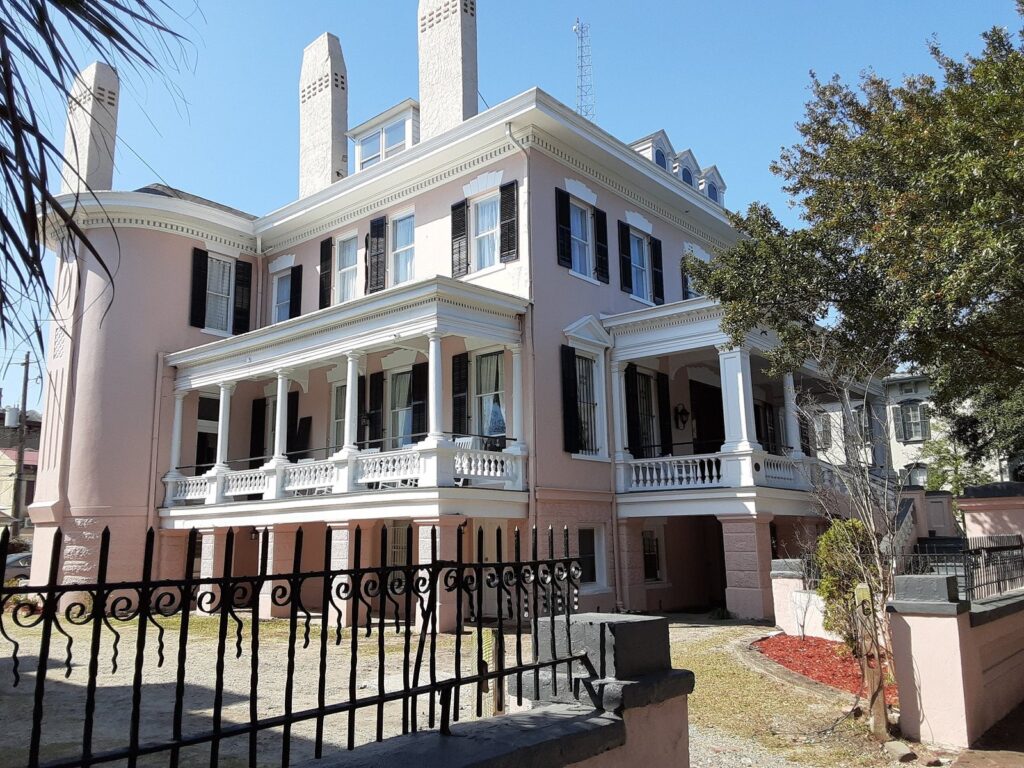
The best area to stay in Savannah for first-time visitors is the Historic District, and within it, the blocks between Bay Street and Jones Street, from City Market east to the squares along Abercorn and Habersham streets. Base yourself there and River Street is a few minutes’ walk, Forsyth Park is 10 to 20 minutes away, and you won’t need a car until you leave town. Light sleepers should shift south of Jones Street toward Forsyth Park. If you want the river outside your window and don’t mind a loud Saturday night, book on the riverfront.
This guide is for first visits of two to four nights, with or without a car. The caveat that matters is the true cost of a night: Savannah adds 15% in taxes plus a $5 fee per room per night, and parking downtown is rarely free, so the cheapest-looking rate isn’t always the cheapest stay. Taxes, parking rates and transit details were checked October 1, 2026 against official sources. For hotel styles and the wider picture, see our complete guide to where to stay in Savannah.
Savannah’s Areas at a Glance
Walking times are approximate, measured along the street grid. The Historic District runs about a mile from the river south to Forsyth Park, 20 to 25 minutes on foot without stops.
| Area | Walk to River Street | Walk to Forsyth Park | Night noise | Best for |
|---|---|---|---|---|
| City Market, Broughton Street and the northern squares | 2 to 7 minutes | 15 to 20 minutes | Moderate to high | First-timers who want everything close |
| Middle squares, Oglethorpe Avenue to Jones Street | 8 to 15 minutes | 5 to 12 minutes | Low to moderate | Classic Savannah with quieter nights |
| South of Jones Street to Forsyth Park | 15 to 25 minutes | 0 to 5 minutes | Low | Light sleepers, park lovers, longer stays |
| River Street and Bay Street | 0 to 3 minutes | 20 to 30 minutes | High on weekends | River views, nightlife, short stays |
| Plant Riverside District (west end) | On the river | About 30 minutes | High | An all-in-one stay with bars and music on site |
| Eastern Wharf (east end) | 15 to 20 minutes along the river | About 30 minutes | Moderate | A newer riverfront base with a pool |
| Victorian District and Starland | Drive or rideshare | 5 to 20 minutes | Low, except Starland’s bars | Second visits and vacation rentals |
| Hutchinson Island | Free ferry | Ferry plus a long walk | Low | Golf, spa and conventions |
| Midtown, Southside and the airport | 10 to 25 minutes by car | By car | Low | Budget road trips and early flights |
The Historic District, Block by Block
“Stay in the Historic District” is the advice everyone gives, and it’s right, but the district isn’t one place. Its north edge sits on the river and its bars; its south edge is leafy and residential. Where you land between the two decides whether you hear the street at midnight, how far you walk to dinner and what you pay for parking. Our Savannah Historic District guide covers the neighborhood itself; here’s how its parts compare as a base.
City Market, Broughton Street and the northern squares: our pick for most first-timers
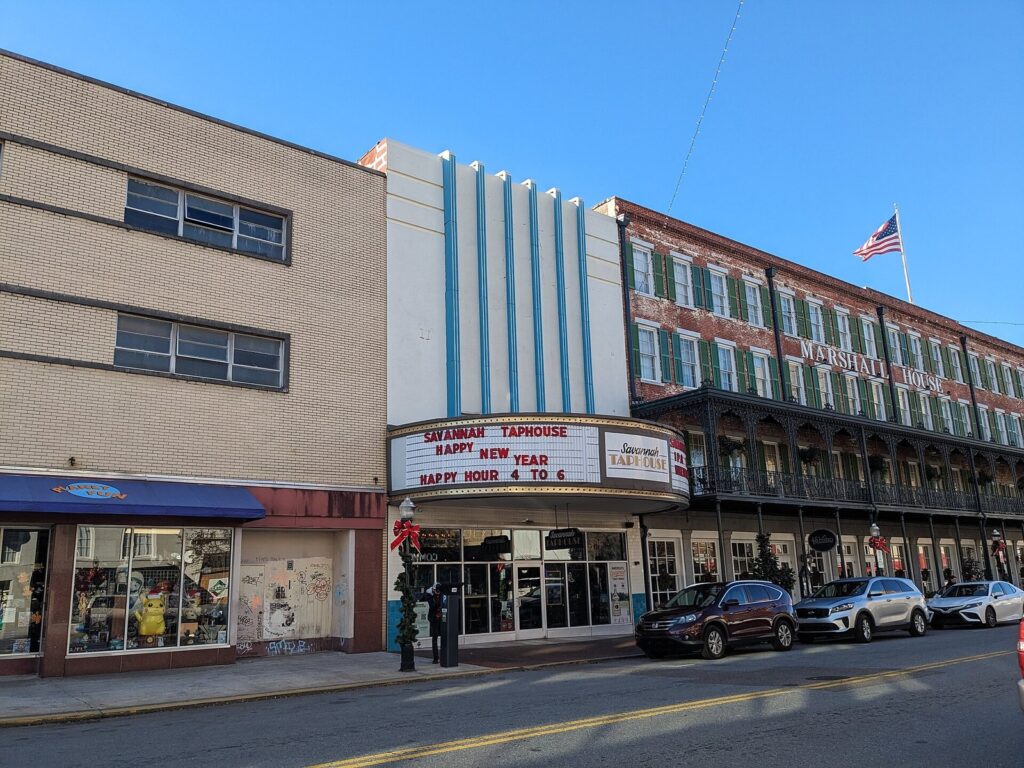
This is the band between Bay Street and Oglethorpe Avenue: City Market and Ellis Square on the west, Broughton Street’s shops through the middle, and Johnson, Reynolds, Wright and Oglethorpe squares in between. It’s the most central spot in Savannah. River Street is a few minutes downhill, the free DOT Express Shuttle stops nearby, and you can walk to most of the big house museums in under ten minutes.
The trade-off is evening noise. City Market’s restaurants and bars stay busy, and the whole band sits inside the City’s to-go cup zone, which runs from the river south to Jones Street, so people drift between bars with drinks in hand. Rooms facing a courtyard or a quiet side street solve most of it.
Examples range from the Andaz Savannah on Ellis Square and the Marshall House on Broughton Street to Planters Inn on Reynolds Square, which Visit Savannah lists among its accessible hotels. Parking is easiest in the City’s Whitaker Street Garage under Ellis Square or the Bryan Street Garage.
Plan it: 2 to 7 minutes to River Street; 15 to 20 minutes to Forsyth Park. Price tier: mid to high, with a premium for anything facing the squares or the river. Noise: moderate on weeknights, higher on weekends. Parking: City garages, $2 an hour with weekday caps of $20 to $24.
The middle squares, Oglethorpe Avenue to Jones Street: our pick for quiet
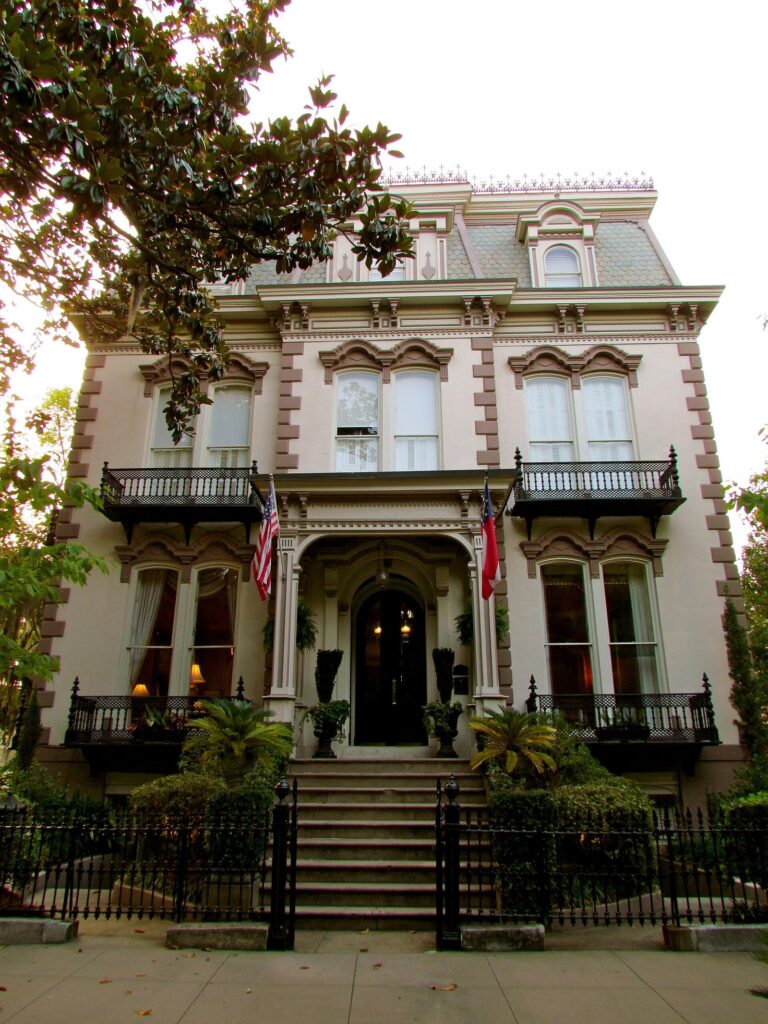
South of Oglethorpe Avenue the district gets quieter and greener: Chippewa, Lafayette, Madison, Pulaski and Troup squares, with the Cathedral Basilica’s spires over the rooftops. This is where Savannah’s historic inns cluster, in restored mansions and townhouses facing the squares, and where the city looks most like its postcards. You’re still only a 10-minute walk from City Market and about the same from Forsyth Park, which makes it the best all-round base if you’re happy to walk.
Two larger hotels anchor the band: the Perry Lane Hotel, a Luxury Collection property with a rooftop pool and 167 rooms, roughly halfway between River Street and Forsyth Park, and The DeSoto, with 245 rooms near the cathedral. Most other options are smaller inns, such as the Hamilton-Turner Inn on Lafayette Square and the Foley House Inn on Chippewa Square. Expect character, breakfasts and personal service; also expect stairs, smaller rooms in some houses and few elevators, so ask before you book if steps are a problem.
Plan it: 8 to 15 minutes to River Street; 5 to 12 minutes to Forsyth Park. Price tier: mid to high; inns price by room and season. Noise: low to moderate, since the to-go zone still reaches Jones Street but the bars don’t. Parking: some inns have small lots or arrangements; otherwise meters and City garages.
South of Jones Street to Forsyth Park
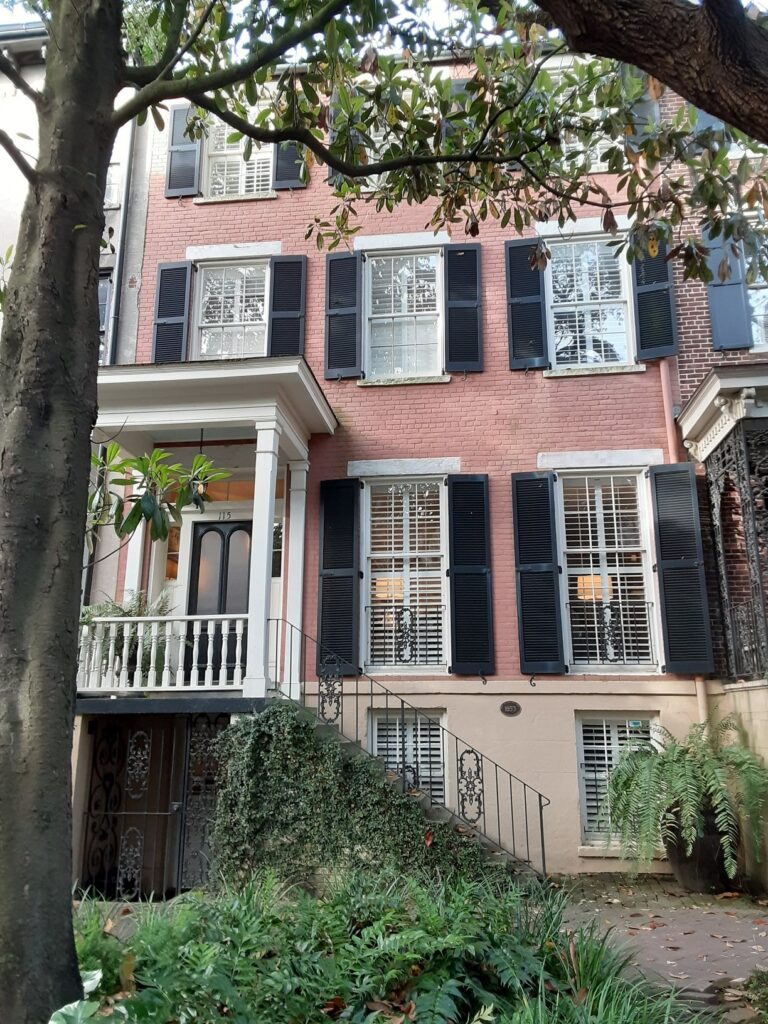
Below Jones Street the Historic District becomes a neighborhood: Monterey, Chatham and Whitefield squares, rows of townhouses, and Forsyth Park at the bottom. Monterey Square and the park sit outside the to-go cup zone, and at night it shows. Mornings are the payoff: a run or a walk under the oaks, the fountain before the crowds, and the Forsyth Farmers’ Market on Saturdays from 9am to 1pm.
The cost is distance. River Street is 15 to 25 minutes away on foot, and dinner near City Market means a walk home of the same length. The free DOT Express Shuttle’s Forsyth loop helps by day, running every 10 minutes or so until 7pm on weekdays and 6pm at weekends, but after that you’re walking or calling a rideshare. Hotel Bardo, which opened in February 2024 in the 19th-century building facing the park, and The Gastonian, an inn of two 1868 mansions, are two examples at opposite scales.
Plan it: 15 to 25 minutes to River Street; 0 to 5 minutes to Forsyth Park. Price tier: wide, from inns to a high-end resort hotel. Noise: the lowest in the district. Parking: street parking is easier to find here than farther north, and the Visitor Day Pass covers meters for $15 a day.
River Street and Bay Street
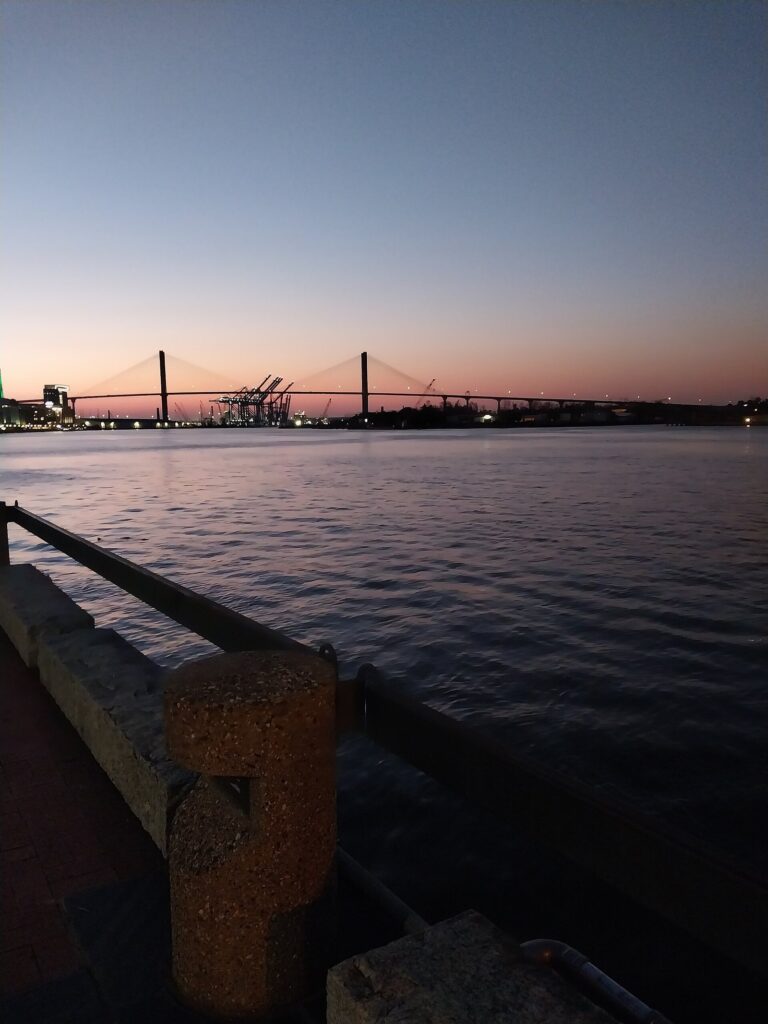
The riverfront puts you in the middle of things: ships gliding past, the Belles Ferry at the door and dozens of restaurants and bars within a few hundred yards. Hotels here either sit on River Street itself in converted warehouses or along Bay Street at the top of the bluff, with the Hyatt Regency between the two and the Holiday Inn Express Historic District, with its rooftop pool, among the Bay Street options.
Be clear-eyed about the downsides. River Street is the loudest part of Savannah on Friday and Saturday nights. It’s paved in uneven cobblestones, and getting up to Bay Street means steep ramps, old stone stairs or one of two public elevators, between the Hyatt and City Hall or at The Alida hotel. River views carry the highest prices in town. Our verdict: a riverfront room is a fine one- or two-night treat, especially midweek, but on a longer first trip the noise and the climb wear thin.
Plan it: 0 to 3 minutes to River Street; 20 to 30 minutes to Forsyth Park. Price tier: high for river views. Noise: high on weekends, and highest around St. Patrick’s Day; in 2026 the City closed off the River Street and City Market areas for the parade. Parking: mostly hotel valet or City garages.
Plant Riverside District, at the west end
At the west end of River Street, the old riverfront power plant is now the Plant Riverside District, anchored by the JW Marriott Savannah Plant Riverside District, whose rooms spread across three buildings: the Power Plant, the Three Muses and the Atlantic. The lobby holds dinosaur skeletons and fossils, there are about a dozen bars and restaurants, including a rooftop lounge, and District Live stages ticketed concerts. It works as a self-contained stay, which is exactly its drawback for first-timers: the squares are a 10-minute walk away and Forsyth Park about 30, and the district is built for night life, not quiet.
Plan it: On the river; about 30 minutes to Forsyth Park. Price tier: high. Noise: high, with live music and bars on site. Parking: hotel valet.
Eastern Wharf, at the east end
At the other end of the Riverwalk, Eastern Wharf is a 54-acre development of parks, shops, restaurants and homes, with the Thompson Savannah as its hotel: 193 rooms, a pool, the restaurant Fleeting and the rooftop Bar Julian. It’s newer and calmer than the west end, with a riverfront park next door. The catch is that the squares start about 15 minutes’ walk away along the river, so most sightseeing days begin with a stroll or a short ride.
Plan it: 15 to 20 minutes along the river to City Hall; about 30 minutes to Forsyth Park. Price tier: high. Noise: moderate. Parking: hotel or the City’s Eastern Wharf garage ($2 an hour, $24 weekday maximum, $10 at weekends).
Beyond the Historic District
Victorian District and Starland
South of Gwinnett Street, the Victorian District runs to Anderson Street, with Starland’s cafés, galleries and Starland Yard’s food trucks farther south along Bull Street toward Victory Drive. Most lodging here is vacation rentals rather than hotels. It’s a better fit for a second trip than a first: you’ll be 5 to 20 minutes from Forsyth Park but a mile and a half or more from River Street, and evenings downtown end with a rideshare.
Hutchinson Island
Across the river, the Westin Savannah Harbor Golf Resort and Spa sits beside the convention center, with an 18-hole course, a spa and the best skyline views in town. The free Belles Ferry crosses to City Hall from 7am to 10pm. After 10pm, getting back means driving or a rideshare over the Talmadge Bridge. It suits golfers, spa trips and conventions; for sightseeing first-timers, the ferry schedule is a leash.
Midtown, Southside and the airport
Chain hotels with free parking line Abercorn Street on the Southside and cluster near the airport and Pooler off I-95. They cost less and parking is simple, but every visit to the Historic District becomes a 10- to 25-minute drive plus a parking fee, which eats into the savings on a short trip. The airport says the Historic District is about 20 minutes from its terminal, so an airport hotel only makes sense before a very early flight.
Thinking about Tybee Island instead? It’s 18 miles and about 30 minutes from downtown on US 80, so it works for a beach trip, not a first look at Savannah. Our Tybee Island and Savannah beaches guide covers where to stay there.
What a Night Really Costs: Taxes and Parking
Savannah hotel bills carry three charges on top of the room rate: the City’s 8% hotel-motel tax, the 7% sales tax and Georgia’s flat $5 fee per room per night. Together that’s 15% plus $5 a night, before parking or any amenity fee a hotel adds. The table uses round example rates, not quotes.
| Room rate per night | Taxes (15%) | State fee | Total per night |
|---|---|---|---|
| $100 | $15 | $5 | $120 |
| $200 | $30 | $5 | $235 |
| $300 | $45 | $5 | $350 |
Parking is the other variable. Many downtown hotels charge separately for it, often valet only, so check the nightly fee before you book and compare it with the City’s garages, which are open 24 hours and take cards only:
| Option | Cost | Good to know |
|---|---|---|
| Bryan Street, Robinson and State Street garages | $2 an hour, $20 weekday maximum, $5 flat at weekends | Closest to City Market and Broughton Street |
| Whitaker Street Garage (under Ellis Square) and Eastern Wharf Garage | $2 an hour, $24 weekday maximum, $10 at weekends | Whitaker is the most central; Eastern Wharf serves the east riverfront |
| Liberty Street Garage | $1 an hour, $14 maximum | The cheapest City garage |
| Visitor Day Pass for street parking | $15 for 24 hours, $24 for 48 hours | On-street meters only, not garages or street-sweeping zones |
Garages charge about $25 on special-event days. If you’re flying in and staying downtown, skipping the rental car often saves more than any room rate difference. Our guide to getting around and parking in Savannah covers meters, rideshares and the free shuttle in detail.
When to Book, and What Moves the Price
Savannah room rates swing more with the calendar than with the neighborhood. Spring is the busiest season, with mild weather, azaleas and the city’s biggest festival weekends, and the week of St. Patrick’s Day is the most expensive and fastest-selling of the year. Weekends cost more than weeknights almost everywhere downtown, and river views and square views carry a premium over rooms facing a parking deck or an alley.
That gives a first-timer three easy levers. Shift a weekend trip to Sunday through Thursday if you can. Book spring and St. Patrick’s dates months ahead, because the Historic District’s inns are small and sell out first. And if the middle squares are beyond the budget, look at the larger hotels on the same blocks or at the edges of the district before giving up on walkability; the savings from a Southside chain hotel shrink once you add a daily parking charge downtown.
For seasons, weather and festival timing, see our guide to the best time to visit Savannah.
Noise: Where Savannah Stays Up Late
If you sleep lightly, location matters more than the hotel’s star rating. Three things drive night noise downtown:
- The to-go cup zone. Drinks in to-go cups are legal from the river south to Jones Street, west to the Talmadge Bridge and east past Savannah River Landing. Monterey Square and Forsyth Park are outside it.
- River Street and City Market. These are where the bars are, and weekend crowds stay late.
- Plant Riverside. The district’s District Live venue stages ticketed concerts, and its bars run late.
St. Patrick’s Day is a special case. In 2026 the City closed the City Market and River Street areas from 6am on the Friday before the parade, and the whole northern half of the district becomes one large party. If your dates fall that week and you want sleep, stay south of Jones Street or outside downtown. Inside any hotel, ask for a room off the street side, away from the elevator and the ice machine, and above the ground floor.
Accessibility: Choosing a Base If Steps Are a Problem
The Historic District is flat, which helps, but its brick sidewalks, cobblestones and old buildings don’t always cooperate. River Street is the hardest stretch, with uneven stones and steep ramps up to Bay Street, eased by the two public elevators. Historic inns in 19th-century houses often have stairs and no elevator, so ask specifically about step-free rooms and entrances.
Newer hotels are the safer bet. Visit Savannah’s accessibility page names Planters Inn on Reynolds Square, the DoubleTree by Hilton Savannah Historic District, the AC Hotel Savannah Historic District and the Westin Savannah Harbor as accessible options. The free DOT Express Shuttle and Belles Ferry are both ADA accessible. Our accessible Savannah travel guide covers equipment rental and paratransit.
Which Area Fits Which Traveler?
| You are | Stay here | Why |
|---|---|---|
| On a first trip without a car | City Market, Broughton Street or the middle squares | Everything is walkable; the free shuttle covers the rest |
| A light sleeper or a couple wanting calm | South of Jones Street to Forsyth Park | Outside the to-go cup zone and away from the bars |
| Here for nightlife | River Street, Bay Street or Plant Riverside | You’ll walk home, not ride |
| Traveling with kids | Near Forsyth Park, or a downtown hotel with a pool | Room to run, and a pool for hot afternoons |
| Driving in on a budget | Midtown, the Southside or near the airport | Lower rates and free parking, if you accept the drive |
| Using a wheelchair | A newer hotel near City Market or on Hutchinson Island | Elevators, step-free entrances and the ADA shuttle and ferry |
| Coming for golf or a convention | Hutchinson Island | The course, the spa and the convention center are on site |
| On a second visit | The Victorian District or Starland | A local feel, rentals, and cafés away from the crowds |
For family-specific advice, including pools and suites, see our Savannah with kids guide. Several Historic District chain hotels include breakfast and a pool, among them the Hampton Inn and Suites Savannah Historic District and the Holiday Inn Express Historic District.
Questions to Ask Before You Book
- What does parking cost per night, and is it valet only? Compare the answer with the City garages’ daily caps of $14 to $24.
- Which way does the room face? Square, courtyard and river views cost more; street-side rooms inside the to-go zone are noisier.
- Are there steps, and is there an elevator? Ask about the entrance, the room and the bathroom, not just the building.
- Is there a resort, amenity or destination fee? Some hotels add one on top of the 15% in taxes and the $5 state fee.
- What’s included? Breakfast is common at inns and at some chain hotels, and a pool matters from June to September.
- How many minutes is it to River Street and Forsyth Park? A hotel’s “walking distance” can mean anything from two minutes to twenty.
How We Compared the Areas
We judged each area on five things: walking time to River Street and Forsyth Park, estimated along the street grid; night noise, using the City’s to-go cup ordinance and the location of bars and concert venues; parking, from the City’s garage rates and the Visitor Day Pass; accessibility, from operators and Visit Savannah’s accessibility page; and price tier, described rather than quoted, because nightly rates change daily. Hotel names are examples confirmed as operating in October 2026, not endorsements. We haven’t stayed in them, and no hotel paid to be mentioned.
Best Area to Stay in Savannah FAQ
Is it better to stay on River Street or in the Historic District?
River Street is part of the Historic District, along its northern edge. Stay on it for river views and nightlife, and expect weekend noise, cobblestones and a steep climb up to Bay Street. For most first-timers, a hotel a few blocks inland, around City Market or the squares, is quieter and just as close to everything, usually at a lower rate.
Do I need a car if I stay in the Historic District?
No. The district is about a mile from the river to Forsyth Park, and the free DOT Express Shuttle and Belles Ferry fill the gaps. A car helps only for trips out to Bonaventure, Wormsloe or Tybee, and parking it downtown costs $14 to $24 a weekday in City garages, so many visitors skip it or rent one for a single day.
Is the Historic District safe at night?
We don’t rank areas by crime data, and no guide can promise safety. Ordinary city habits matter most: walk on lit streets with other people around, take a rideshare rather than walking long, empty stretches late at night, keep valuables out of sight in parked cars, and ask your hotel’s front desk which blocks they’d skip after dark.
How much are hotel taxes in Savannah?
A Savannah hotel bill adds the City’s 8% hotel-motel tax and the 7% sales tax to the room rate, plus Georgia’s $5 fee per room per night. A $200 room therefore comes to about $235 a night, before parking and any amenity or resort fee a hotel charges separately. Check the final total, not the headline rate.
Is Forsyth Park a good area to stay for a first visit?
Yes, if you want quiet nights and don’t mind a 20-minute walk to River Street. The blocks around the park sit outside the to-go cup zone, the Saturday farmers’ market is on your doorstep, and the free shuttle’s Forsyth loop runs toward the river by day. Night owls and very short stays do better closer to City Market.
Should I stay on Tybee Island instead?
Only if the beach is the main event. Tybee is 18 miles and about 30 minutes from downtown on US 80, so every evening in the Historic District means a drive or a rideshare back. First-timers who want both usually split the trip: a few nights downtown for the squares and restaurants, then a night or two on the island.
Related Savannah Guides
- Where to Stay in Savannah: the full overview of hotel styles, prices and booking
- Two Days in Savannah Itinerary: a walking plan built for a Historic District base
- First-Time Visitor Guide to Savannah: what to know before your first trip
- Getting Around Savannah and Parking: garages, meters, rideshares, the shuttle and the ferry
- Savannah With Kids and Family Travel: family bases, pools and things to do
Sources and How We Checked
Taxes, parking rates, transit details and hotel status were checked on October 1, 2026. This guide is compiled from the City, transit agencies, operators and official tourism listings below, not from other travel lists, and we don’t claim first-hand stays. Hotel prices and parking fees change often, so confirm them when you book.
- City of Savannah: parking garages; visitor parking and the Visitor Day Pass; local and state taxes; hotel-motel tax resolution; to-go cup ordinance
- Georgia Department of Revenue: state hotel-motel fee
- Chatham Area Transit: DOT Express Shuttle; Savannah Belles Ferry
- Visit Savannah: accessibility; contemporary hotels
- Savannah Waterfront Association: getting to River Street
- Plant Riverside District: FAQs; Explore Georgia: JW Marriott Savannah Plant Riverside District
- Eastern Wharf: The Park at Eastern Wharf; Thompson Savannah opening
- Hotels: Perry Lane Hotel; Holiday Inn Express Savannah Historic District; Hampton Inn and Suites Savannah Historic District; Westin Savannah Harbor; Hotel Bardo (Michelin Guide); Historic Inns of Savannah
- Neighborhoods: Library of Congress survey of the Savannah Victorian District; Thomas Square Neighborhood Association; Starland Yard; Forsyth Farmers’ Market
- Getting farther out: Savannah/Hilton Head International Airport; Visit Tybee, getting here; WTOC on St. Patrick’s Day closures
Savannah Tourism Guide is an independent publication. We are not affiliated with Visit Savannah, the City of Savannah or any hotel or attraction listed here, and no one paid to be included.
Photo Credits
- Mansion on East Gaston Street: photo by JeffersonLH, Wikimedia Commons (CC BY-SA 4.0)
- Broughton Street: photo by Pokemonprime, Wikimedia Commons (CC BY 4.0)
- Mansion on Lafayette Square: photo by Jeff Gunn from Atlanta, USA, Wikimedia Commons (CC BY 2.0)
- Townhouse on East Jones Street: photo by JeffersonLH, Wikimedia Commons (CC BY-SA 4.0)
- Savannah River at sunset: photo by RandomKatze, Wikimedia Commons (CC0)