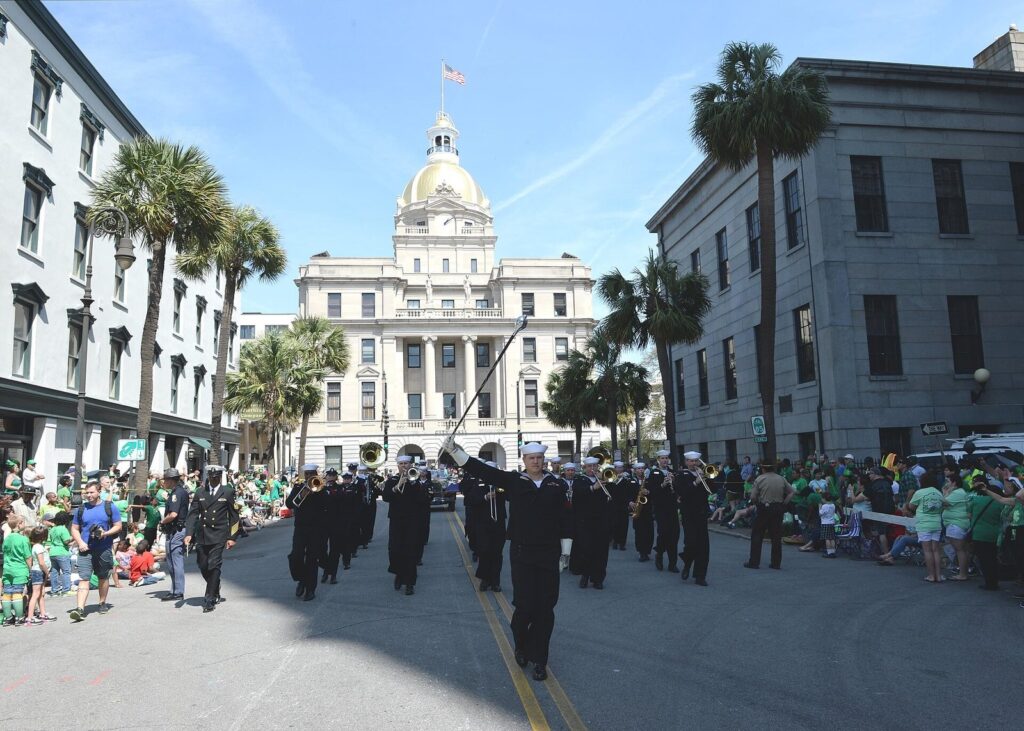
The best time to visit Savannah GA is late March through May or mid-October through early November. That’s when the average highs sit between the low 70s and mid 80s, the rain is moderate, and the city is at its most walkable. Spring is the most beautiful and the most crowded; fall is nearly as pleasant, often cheaper, and November is the driest month of the year. If price and quiet matter most, come in January or February, when highs average in the 60s. If the beach matters most, come between May and September and plan your days around the heat, the afternoon storms and, from June, hurricane season.
This guide is for anyone choosing dates, and it goes beyond the weather to the things that change a trip as much as temperature does: festivals and closures, crowds and prices, bugs and pollen, and storms. The caveat is that normals are averages. Any given week can run hotter, colder or wetter, and events like St. Patrick’s Day shape a visit more than a few degrees ever will. Weather figures are NOAA’s 1991-2020 normals for the Savannah airport, and everything else was checked September 23, 2026 against official sources.
Savannah Month by Month: The Decision Matrix
| Month | Avg high / low | Rain | What’s happening | Verdict |
|---|---|---|---|---|
| January | 61.4°F / 40.0°F | 3.28 in | Quietest month; Mrs. Wilkes’ winter break begins January 1 | Great value, cool nights |
| February | 65.1°F / 42.9°F | 2.80 in | Savannah Book Festival (February 4-7, 2027) | Underrated; mild and uncrowded |
| March | 71.4°F / 48.6°F | 3.50 in | Azaleas; St. Patrick’s Day (March 17, 2027); Savannah Bananas season starts | Beautiful; book early and plan around the parade |
| April | 78.2°F / 55.2°F | 3.39 in | Savannah Music Festival (April 2-17, 2027); garden tours | Peak season: the best weather and the highest demand |
| May | 84.7°F / 63.4°F | 3.62 in | Tybee lifeguards from May 1; warm evenings | Excellent for city plus beach |
| June | 89.6°F / 70.7°F | 6.65 in | Hurricane season starts June 1; wettest month | Beach-first trips only |
| July | 92.3°F / 73.7°F | 5.75 in | Hottest month; July 3 and 4 holidays | Hot and humid; mornings and evenings only |
| August | 90.8°F / 73.3°F | 5.46 in | Still hot and stormy; warmest sea | Beach days, museum afternoons |
| September | 86.4°F / 69.0°F | 4.35 in | Savannah Jazz Festival in Forsyth Park; hurricane peak around September 10 | Warm and quieter; watch the tropics |
| October | 79.0°F / 58.6°F | 3.72 in | SCAD Savannah Film Festival (October 24-31, 2026); Tybee lifeguards through October 31 | One of the best months of the year |
| November | 70.2°F / 48.0°F | 2.39 in | Driest month; Savannah Food & Wine Festival (November 11-15, 2026) | Excellent walking weather |
| December | 63.7°F / 42.6°F | 3.21 in | Holiday Tour of Homes (December 12, 2026); holiday closures | Cozy and fairly quiet |
The Short Answer by Traveler
| If you want | Go in |
|---|---|
| The best weather for walking the squares | April, late October or November |
| Azaleas and spring color | Late March to early April |
| The lowest crowds and prices | January and February |
| Beach days on Tybee with lifeguards | May through September, or early October |
| Festivals | March and April (music, St. Patrick’s), October and November (film, food) |
| To avoid heat | November through April |
| To avoid hurricane risk | December through May |
| To avoid crowds on a spring trip | Midweek, away from St. Patrick’s week and festival weekends |
If you’re still sketching the rest of the trip, our Savannah travel guide covers getting here, costs and what to book once you’ve picked your dates.
City Season vs. Beach Season
Savannah has two best seasons, and they don’t overlap much. The city is at its best from late March to May and from mid-October through November, when walking is comfortable. The beach is at its best from late May to early October, when the water is warm and lifeguards are on duty. The overlap, in May and early October, is the time to come if you want both in one trip: warm enough for Tybee, and not yet, or no longer, too hot for the squares.
Spring: March, April and May
Spring is Savannah’s high season for good reason. March averages a 71.4°F high, April 78.2°F and May 84.7°F, and the squares fill with color, from azaleas in late March and early April to the city’s flowering trees. The evenings are still cool enough in March and April to walk after dinner in comfort. It’s also the busiest and most expensive time to visit: spring weekends, St. Patrick’s week and festival weekends fill hotels first, so book as soon as your dates are fixed.
Two things to know. Spring is pollen season, and a film of yellow pine pollen on cars and benches is a normal sight in late March and April; allergy sufferers should pack medication. And March’s big event, St. Patrick’s Day, is covered below: you’ll either want to be here for it or be well clear of it.
Summer: June, July and August
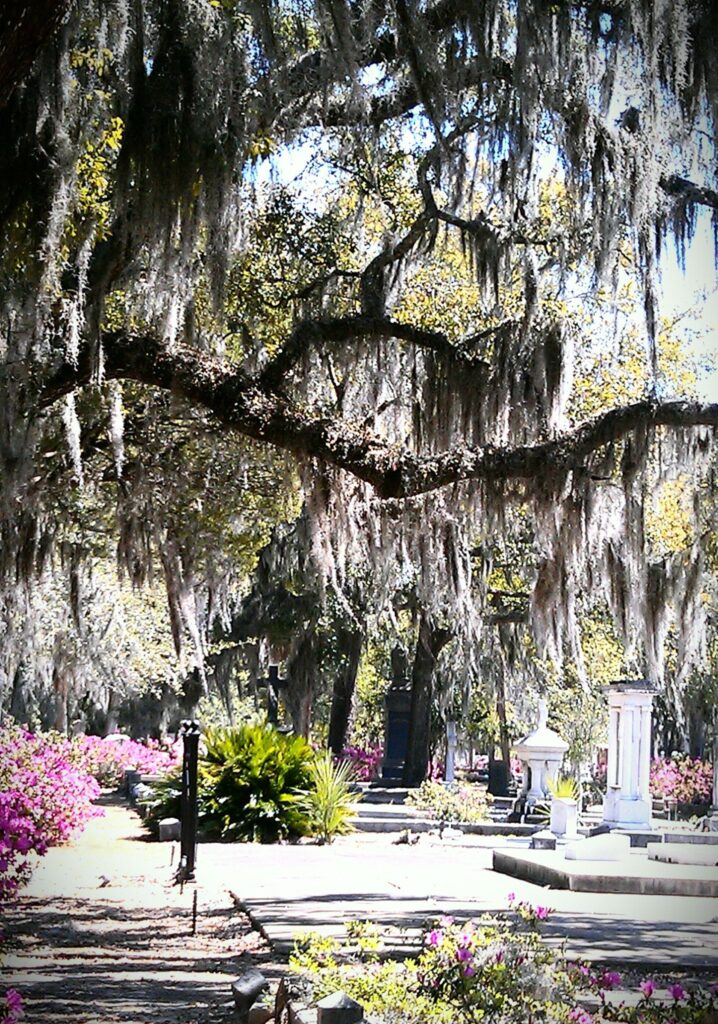
Summer in Savannah is hot, humid and wet. July averages a 92.3°F high and a 73.7°F low, so even the nights stay warm, and June, July and August are the three wettest months, with 6.65, 5.75 and 5.46 inches of rain. Most of that falls in short, heavy afternoon thunderstorms, which is useful to know: the mornings are often clear, the storms roll through, and the evenings can be pleasant.
Summer works if you plan around it. Walk the squares from about 8am to 11am, spend the middle of the day in museums and at a long lunch, and come back out after 5pm. Or make it a beach trip: Tybee’s lifeguards are on duty daily from May 1 to October 31, and the ocean is at its warmest in August, when satellite-based averages put the sea surface in the low 80s°F. Summer weekdays are usually easier to book than any spring weekend. Bring rain gear, sun protection and more water than you think you need.
Heat, Humidity and How Summer Really Feels
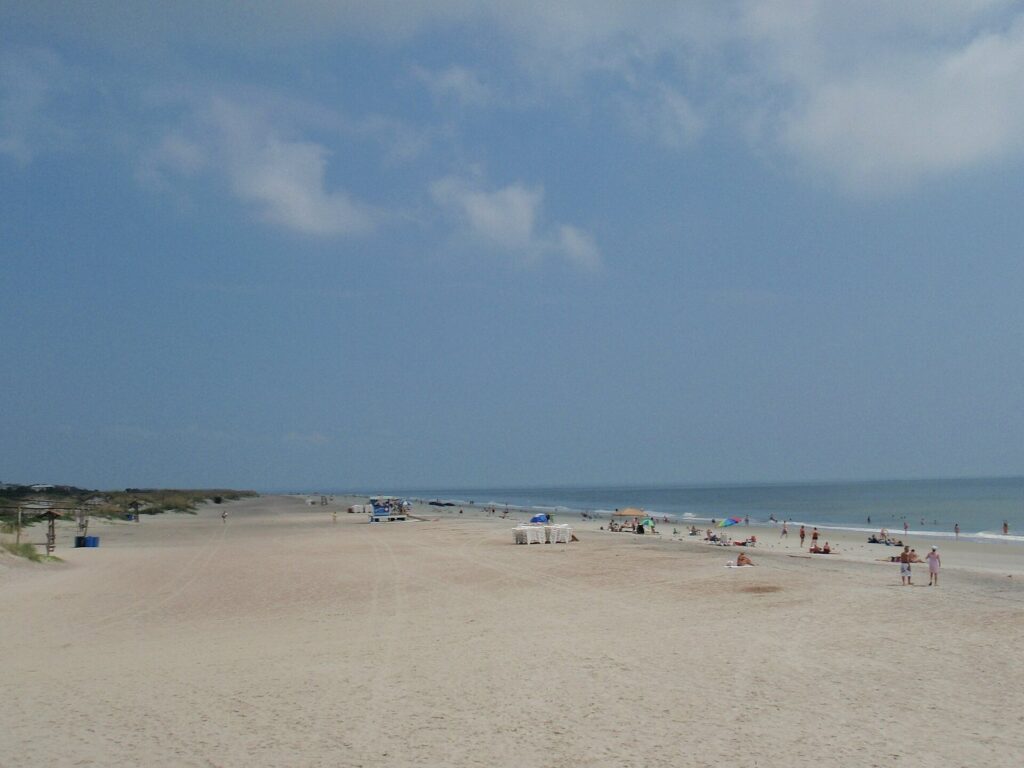
Savannah’s summer numbers understate the experience. A 92.3°F July afternoon with coastal humidity feels considerably hotter, and nights that only cool to the mid-70s°F give your body little relief. The National Weather Service issues heat advisories when the combination turns dangerous, and those are the days to limit outdoor walking to early morning and evening. Drink water before you’re thirsty, take breaks in air-conditioned museums and shops, choose shaded squares over the open riverfront, and use the free DOT Express Shuttle for longer stretches. If you’re traveling with children or older relatives, build a midday rest into every summer day.
Fall: September, October and November
Fall is the season many locals would pick. September is still warm (86.4°F average high) and sits at the peak of hurricane season, which is around September 10, so it’s the one fall month to book flexibly. By October the average high drops to 79.0°F, and November, at 70.2°F with just 2.39 inches of rain, is the driest month of the year and some of the best walking weather Savannah gets. Fall also has a strong festival calendar: the free Savannah Jazz Festival in Forsyth Park in mid to late September, the SCAD Savannah Film Festival (October 24 to 31 in 2026) and the Savannah Food & Wine Festival (November 11 to 15 in 2026). Tybee’s lifeguards stay on duty through October 31, so early October can still be a beach month.
Don’t come for autumn leaves. Savannah’s live oaks are evergreen, and fall color here is subtle at best. Come for the weather, the festivals and the quieter weekdays after the summer crowds leave.
Winter: December, January and February
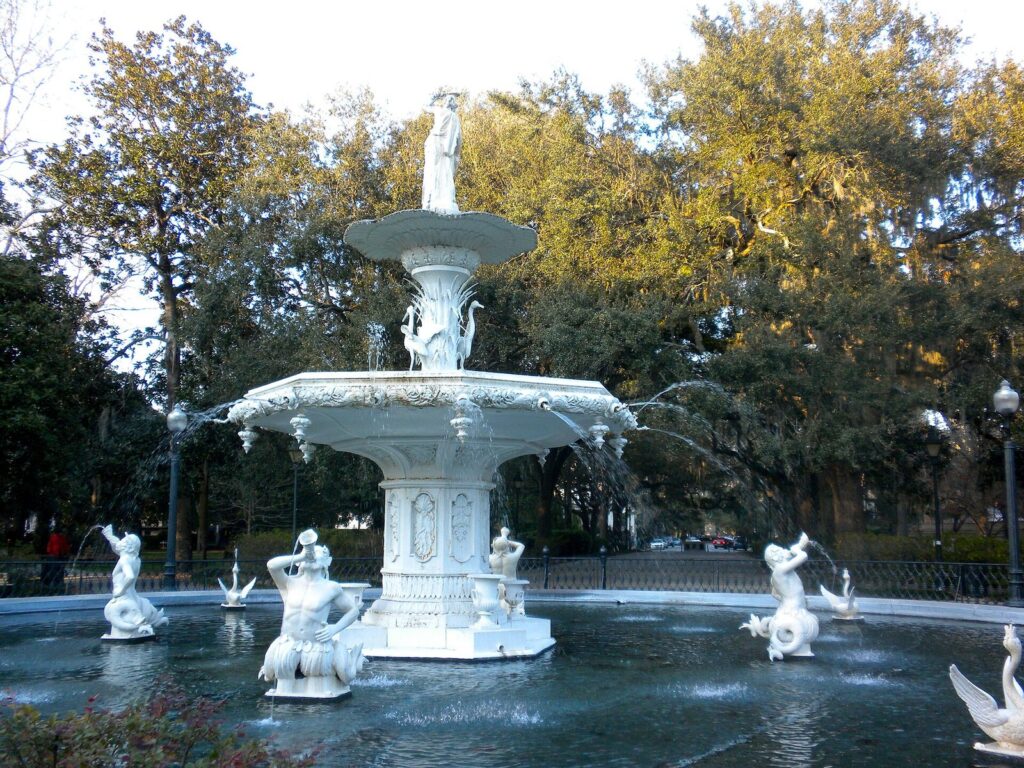
Winter is Savannah’s quiet season, and it’s underrated. January averages a 61.4°F high and a 40.0°F low, February 65.1°F and 42.9°F, and December 63.7°F and 42.6°F. That means sunny afternoons comfortable enough for a jacket-free walk and cold mornings and evenings that call for layers. Crowds are thinner, many visitors find room rates lower outside the holidays, and the squares are at their calmest.
A few things close or change. Mrs. Wilkes’ Dining Room takes its winter break from January 1 to mid-February, usually reopening around February 15. The holidays bring closures: most attractions close on Thanksgiving and Christmas, and many on New Year’s Day and around Christmas Eve. The Savannah Book Festival fills the first week of February (February 4 to 7 in 2027, with a free Festival Saturday on February 6), and December brings the Holiday Tour of Homes (December 12 in 2026). Days are short, so plan outdoor sights like Bonaventure, which closes at 5pm, for the early afternoon.
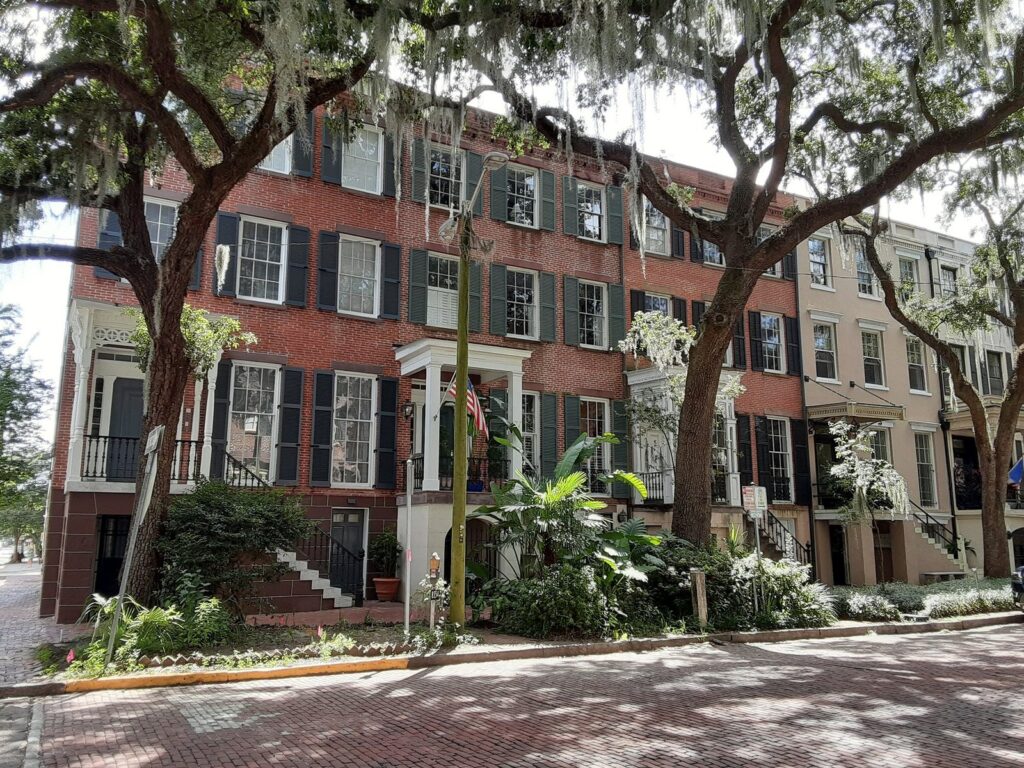
What Rain Looks Like in Each Season
Rain in Savannah comes in three styles. In summer it arrives as short, heavy afternoon thunderstorms, often with lightning, that usually clear within an hour or two; plan outdoor sights for the morning and keep an indoor fallback for the afternoon. In winter and early spring, rain comes with passing cold fronts and can be a gray, all-day affair. And in hurricane season, a tropical storm offshore can bring a day or more of wind and heavy rain even without a direct hit.
A wet day doesn’t have to be a lost one. The Telfair Museums’ three sites share one $30 ticket, the Savannah History Museum and the Georgia State Railroad Museum open daily from 9am to 4pm, Ships of the Sea and the American Prohibition Museum open daily from 10am, and the house museums are indoor tours by definition. The free DOT Express Shuttle links many of them.
Savannah Month by Month
January
The coolest month, with a 61.4°F average high and a 40.0°F low, and the quietest for crowds. Good for museums and long walks on sunny afternoons. Mrs. Wilkes’ is on winter break, and MLK Day closes the Telfair museums (street meters are free that day too).
Best for: museums, house tours without lines and long walks on sunny afternoons. Skip: planning around Mrs. Wilkes’, which is on its winter break. Pack: a warm jacket for mornings and evenings, when the average low is 40.0°F.
February
Mild and uncrowded, with 65.1°F highs, and the least rainy month of the first half of the year at 2.80 inches. The Savannah Book Festival runs February 4 to 7 in 2027, and Mrs. Wilkes’ usually reopens around February 15. A strong pick for a quiet, inexpensive trip.
Best for: a quiet, low-cost city break and the Book Festival. Skip: beach days, since the ocean is near its coolest, around the mid-50s°F by satellite averages. Pack: layers and a light rain jacket.
March
Spring arrives, with a 71.4°F average high, azaleas in the squares late in the month, and St. Patrick’s Day, which falls on a Wednesday in 2027. The Savannah Bananas’ home season at Historic Grayson Stadium usually starts in March. Book early, and check whether your dates overlap the parade.
Best for: azaleas, spring color and St. Patrick’s Day, if you want the party. Skip: parade day for museums, since many close. Pack: layers for 48.6°F nights and allergy medication for the pollen.
April
The classic Savannah month: 78.2°F highs, cool 55.2°F nights and spring color. The Savannah Music Festival runs April 2 to 17 in 2027, and the Garden Club of Savannah’s Tour of Hidden Gardens is set for April 16 and 17, 2027. It’s also the most in-demand month, so book rooms and weekend dinners early.
Best for: walking tours, garden tours, the Music Festival and Tybee day trips before the heat. Skip: last-minute weekend bookings. Pack: light layers and a rain jacket.
May
Warm and bright, with 84.7°F highs, and the start of beach season: Tybee’s lifeguards go on duty daily from May 1. A good month to combine the city and the coast before the summer heat and storms arrive. Memorial Day weekend is busy on the island.
Best for: city-plus-beach trips with lifeguards on duty, and evenings outdoors. Skip: midday walking late in the month. Pack: sun protection and repellent for evenings near the marsh.
June
The wettest month, at 6.65 inches, with 89.6°F highs, and the start of hurricane season on June 1. Afternoon thunderstorms are routine. Best for beach-first trips with a flexible schedule; do the squares early in the day.
Best for: beach mornings, museums and flexible travelers. Skip: long afternoon walks in the heat and storms. Pack: rain gear, breathable clothes and a water bottle.
July
The hottest month, averaging 92.3°F in the afternoon and 73.7°F at night. Walk early and late, take the free DOT Express Shuttle in between, and book a hotel with a pool. The July 3 and 4 holidays bring crowds to the riverfront and Tybee.
Best for: early-morning squares, evening river cruises and ghost tours, and hotel pools. Skip: noon on River Street. Pack: a hat, sunscreen and the lightest clothes you own.
August
Still hot, with a 90.8°F average high and 5.46 inches of rain, and the warmest ocean of the year. Summer weekdays are often easier to book than spring weekends. Some attractions take staff-training closures in late summer, so check hours for anything you’ve planned around.
Best for: warm-water beach days and summer weekday rates. Skip: nonrefundable bookings in hurricane season. Pack: rain gear and repellent.
September
Warm (86.4°F) and quieter after Labor Day, with the free Savannah Jazz Festival in Forsyth Park in mid to late September. It’s the peak of hurricane season, around September 10, so book refundable rates and keep an eye on the tropics.
Best for: the Jazz Festival, quieter weekdays and warm beach days. Skip: nonrefundable bookings near the hurricane peak. Pack: a rain jacket and light clothes.
October
One of the best months: 79.0°F highs, 58.6°F lows and 3.72 inches of rain. The SCAD Savannah Film Festival runs October 24 to 31 in 2026, with tickets on sale from October 2, and Tybee’s lifeguards work through October 31. Ghost tours are especially popular as Halloween approaches.
Best for: walking tours, the Film Festival, ghost tours and late beach days. Skip: waiting to book Film Festival weekends. Pack: light layers for 58.6°F evenings.
November
The driest month, at 2.39 inches, with comfortable 70.2°F highs, which makes it a favorite for walking. The Savannah Food & Wine Festival runs November 11 to 15 in 2026. Most attractions close on Thanksgiving, and hotels get busy over the holiday weekend.
Best for: long walks in dry weather and food lovers, with the Food & Wine Festival. Skip: sightseeing on Thanksgiving Day, when most attractions close. Pack: layers for 48.0°F nights.
December
Cool and cozy, with 63.7°F highs and 42.6°F lows. The Holiday Tour of Homes is set for December 12, 2026, and the squares and inns dress up for the season. Expect closures on December 24 and 25, when street meters are also free.
Best for: the Holiday Tour of Homes, decorated inns and squares, and quiet weekdays. Skip: sightseeing on Christmas Eve and Christmas Day, when closures are widespread. Pack: a warm jacket and layers.
Savannah Events Calendar, 2026 and 2027
| Event | Dates | What it means for your trip |
|---|---|---|
| SCAD Savannah Film Festival | October 24-31, 2026 (tickets from October 2) | Busy screenings; book popular events early |
| Savannah Food & Wine Festival | November 11-15, 2026 | Evening events around town; book dinners early |
| Holiday Tour of Homes | December 12, 2026 | Private homes open for a day |
| Savannah Book Festival | February 4-7, 2027 (free Festival Saturday on February 6) | A busy downtown weekend in a quiet month |
| St. Patrick’s Day | Wednesday, March 17, 2027 | Parade-day closures, road closures and full hotels |
| Savannah Music Festival | April 2-17, 2027 | Peak-season demand for rooms |
| Tour of Hidden Gardens | April 16-17, 2027 | Garden tours on top of peak season |
| Savannah Bananas home games | Spread from March to September; tickets by lottery the fall before | Game weekends add demand |
| Savannah Jazz Festival | Mid to late September, free in Forsyth Park | Evening crowds in the park |
St. Patrick’s Day: Come for It or Avoid It
St. Patrick’s Day is Savannah’s signature celebration, and it changes the city for days. In 2027, March 17 falls on a Wednesday, and the parade is set for that day, starting around 10:15am; when the 17th falls on a Sunday, the parade moves to the Saturday before. In 2026 the City began closures around City Market and River Street from 6am on the Friday before the parade and charged a flat $25 at its garages on parade day.
Many attractions close on parade day, including the three Telfair Museums sites, Ships of the Sea, the Juliette Gordon Low Birthplace, the American Prohibition Museum and the Tybee Island Light Station, and Mrs. Wilkes’ Dining Room closes too. If you want the party, book months ahead and stay downtown. If you don’t, pick another week. Arriving by accident is the worst of both.
Hurricane Season
The Atlantic hurricane season runs from June 1 to November 30 and peaks around September 10. Most summers pass without a direct hit, but storms can disrupt travel along the coast even from a distance, with heavy rain, flooding and closures. If your dates fall in the season:
- Book refundable. Choose flexible hotel rates and consider travel insurance that covers named storms.
- Watch the tropics in the week before you travel, using the National Hurricane Center’s forecasts.
- Sign up for local alerts. The Chatham Emergency Management Agency sends emergency and hurricane notifications for Savannah, Tybee Island and the rest of Chatham County, and anyone visiting can sign up through its website.
- Know that the islands go first. When evacuations are ordered, Tybee Island and other low-lying areas are among the first, so beach stays carry more risk than downtown ones.
Bugs, Pollen and Other Nuisances
Savannah’s weather comes with a few side effects the brochures skip. Tiny biting gnats, often called sand gnats or no-see-ums, are at their worst near the marshes around dawn and dusk in spring and fall. Mosquitoes follow the summer rain. Pine pollen coats everything in yellow in late March and April. And from June through September, humidity makes the heat feel hotter than the thermometer says. None of this is a reason to skip a season; it’s a reason to pack repellent, allergy medication and light, breathable clothes.
What to Pack by Season
| Season | Pack |
|---|---|
| Spring | Layers for cool evenings, a light rain jacket, allergy medication, comfortable walking shoes |
| Summer | Breathable clothes, a hat, sunscreen, a refillable water bottle, rain gear, insect repellent |
| Fall | Light layers, a rain jacket for September storms, repellent for marsh evenings |
| Winter | A warm jacket for mornings and evenings, layers, a scarf; you’ll often shed them by afternoon |
In every season, bring shoes that can handle brick sidewalks and cobblestones. The city’s surfaces are harder on feet than its weather.
The Best Time for Specific Things
- Walking tours: March to May and October to November, in the morning or early evening.
- House museums without lines: weekdays from January to early March.
- Tybee beach days: May through early October, with lifeguards on duty from May 1 to October 31; September weekdays are quieter.
- Dolphin tours and kayaking: the warm months, from late spring to early fall.
- Birding: winter and spring, on Tybee’s North Beach flats and along the Savannah National Wildlife Refuge’s free wildlife drive.
- Ghost tours: any time of year, with demand rising in October.
- Savannah Bananas games: the home season runs from March to September, and tickets are allocated by lottery the fall before.
- Photography: spring for azaleas, and early morning in any season, when the squares are empty and the light is soft.
How the Weather Affects the Main Sights
| Sight | Best timing | Weather notes |
|---|---|---|
| The squares and Forsyth Park | Spring and fall, mornings and evenings | Shaded by oaks, but summer middays are still hot |
| River Street | Evenings, year-round | Open to the sun at midday; breezy by the water |
| Bonaventure Cemetery | Early morning; opens at 8am | Closes at 5pm year-round, before dark in winter |
| Wormsloe | Mornings | The oak avenue trolley is open-air, so bring rain gear on stormy days |
| Fort Pulaski | Mornings, spring and fall | An open brick fort with little shade on the parade ground |
| Tybee’s beaches | May to early October, mornings | Lifeguards from May 1 to October 31; afternoon storms in summer |
| Savannah National Wildlife Refuge | Winter and spring | Heat and bugs make summer visits hard work |
| House museums and galleries | Any season | Indoor tours; ideal for hot or rainy afternoons |
When Prices and Crowds Peak
Savannah’s busiest periods are spring weekends, St. Patrick’s week, big festival weekends, and holiday weekends like Memorial Day, July 4 and Thanksgiving. Those are when hotel rates climb and restaurant tables go fastest. The easiest times to book are January and February, midweek in summer, and weekdays in the fall outside festival dates. Whatever the season, hotel bills carry the same taxes: the City’s 8 percent hotel-motel tax, 7 percent sales tax and Georgia’s $5 per room per night fee. If you’re choosing between two weekends, check the event calendar first; one festival can make a big difference to the price of a room.
How Far Ahead to Book
- Spring weekends, St. Patrick’s week and festival dates: book rooms as soon as your dates are fixed, and weekend dinners at the big-name restaurants at the same time.
- Summer: a few weeks ahead is usually enough for weekdays; holiday weekends like July 4 fill sooner, especially on Tybee.
- Fall: book early for SCAD Savannah Film Festival and Food & Wine Festival dates; ordinary weekdays are flexible.
- Winter: the most flexible season, except around Thanksgiving, Christmas, New Year’s and the Book Festival weekend.
- Tours with limited space: timed house tours such as the Davenport House, and tours that sell out in summer, like the Juliette Gordon Low Birthplace, are worth booking once your days are set, in any season.
Holiday Closures to Plan Around
- Thanksgiving, Christmas and New Year’s Day: the DOT Express Shuttle, the Belles Ferry and Visit Savannah’s visitor centers don’t operate, and most attractions close.
- St. Patrick’s parade day: many museums and Mrs. Wilkes’ close.
- Every Monday: the Telfair Museums close all year.
- City holidays: Savannah’s street meters are free on New Year’s Day, MLK Day, Presidents’ Day, Memorial Day, Juneteenth, July 3 and 4, Labor Day, Veterans Day, Thanksgiving and the day after, and December 24 and 25.
- January 1 to mid-February: Mrs. Wilkes’ Dining Room is on its winter break.
For how these closures play out day by day, our Savannah itineraries build plans around opening days, and our Tybee Island travel guide covers the beach season in detail.
Best Time to Visit Savannah: FAQ
What is the best month to visit Savannah?
April is the classic choice, with a 78.2°F average high, cool nights and spring color, but it’s also the busiest. October and November are close behind, with pleasant temperatures, lower demand and, in November, the driest weather of the year at 2.39 inches of rain. For value and quiet, February is the pick.
What is the rainiest month in Savannah?
June, with an average of 6.65 inches of rain, followed by July (5.75 inches) and August (5.46 inches), according to NOAA’s 1991-2020 normals for the Savannah airport. Most summer rain comes in short afternoon thunderstorms. November is the driest month, averaging 2.39 inches.
Is Savannah too hot in summer?
It’s hot and humid: July averages a 92.3°F high and a 73.7°F low. It’s manageable if you walk early and late, spend midday indoors and use the free DOT Express Shuttle. Summer suits beach-focused trips best; if you mainly want to walk the squares, spring or fall is more comfortable.
When is hurricane season in Savannah?
The Atlantic hurricane season runs from June 1 to November 30, with the peak around September 10. If you travel in those months, book refundable rates, watch the National Hurricane Center’s forecasts and sign up for Chatham Emergency Management Agency alerts. Tybee Island and other low-lying areas are among the first to evacuate.
When is the cheapest time to visit Savannah?
January and February are usually the quietest and least expensive months, with mild afternoons in the 60s°F. Summer weekdays and fall weekdays outside festival dates are also easier on the budget. The most expensive times are spring weekends, St. Patrick’s week and big festival and holiday weekends.
When do the azaleas bloom in Savannah?
Savannah’s azaleas usually peak from late March into early April, though the exact timing shifts with each year’s weather. It’s a popular time to visit, so book early, and remember that St. Patrick’s Day, on March 17, often falls in the same stretch.
Does it snow in Savannah?
Snow is rare. Even January, the coldest month, averages a 61.4°F high and a 40.0°F low, so winter visits usually mean sunny, mild afternoons and chilly mornings rather than snow. Pack layers and a warm jacket for early and late in the day.
Related Savannah Guides
- Savannah Travel Guide and Trip Planning: getting here, costs and what to book once you’ve chosen dates.
- Savannah Itineraries: plans for summer heat, winter and rainy days.
- Tybee Island and Savannah Beaches: beach season, lifeguards and tides.
- Where to Stay in Savannah: booking a base for busy and quiet seasons.
- Getting Around Savannah and Parking: event-day closures and parking.
Sources and How We Checked
We checked this guide on September 23, 2026. Weather figures are NOAA’s 1991-2020 monthly normals for the Savannah airport; event dates and closures come from the organizers, attractions and the agencies listed below, not from other travel guides, and the page doesn’t claim first-hand visits. Normals are long-term averages, so check the forecast before you travel.
- NOAA: 1991-2020 monthly climate normals for the Savannah airport, National Hurricane Center climatology; National Weather Service: Charleston office climate data
- Chatham Emergency Management Agency: emergency alerts and hurricane preparedness
- Events: WTOC on St. Patrick’s Day 2027, WTOC on St. Patrick’s Day 2026 parking, Savannah Music Festival, SCAD Savannah Film Festival, Savannah Book Festival, WTOC on the Savannah Jazz Festival, Savannah Bananas, Garden Club of Savannah, Holiday Tour of Homes, Savannah Food & Wine Festival listing
- Attractions and closures: Telfair Museums, Ships of the Sea, Juliette Gordon Low Birthplace, American Prohibition Museum, Tybee Island Light Station, Mrs. Wilkes’ Dining Room, City of Savannah cemeteries
- City and transit: City of Savannah parking holidays, DOT Express Shuttle, Savannah Belles Ferry, visitor information centers, hotel-motel tax resolution, Georgia State Hotel-Motel Fee
- Tybee Island: beaches and lifeguard season, average sea temperatures
Savannah Tourism Guide is an independent publication. We are not affiliated with Visit Savannah, the City of Savannah or any event or attraction listed here, and no one paid to be included.
Photo Credits
- St. Patrick's Day parade at City Hall: photo by Petty Officer 3rd Class Mark Hays, Wikimedia Commons (Public domain)
- Spanish moss and azaleas: photo by L F, Wikimedia Commons (CC BY 3.0)
- Tybee Island beach: photo by XeresNelro, Wikimedia Commons (CC BY-SA 4.0)
- Forsyth Park fountain: photo by Jennifer Morrow from San Francisco, Wikimedia Commons (CC BY 2.0)
- Jones Street row houses: photo by JeffersonLH, Wikimedia Commons (CC BY-SA 4.0)