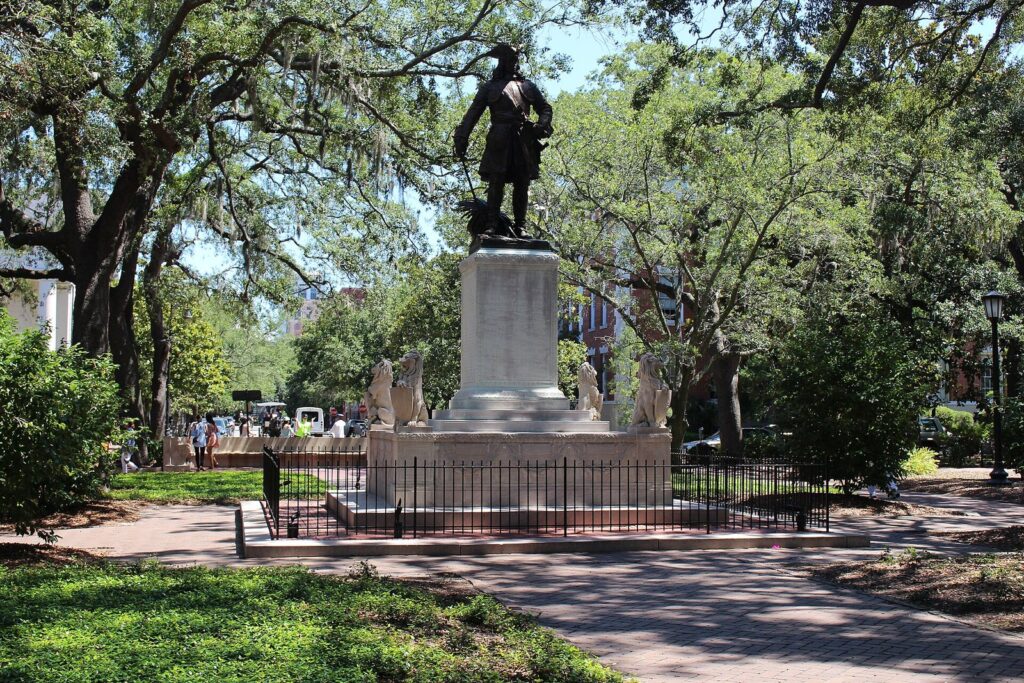
Savannah Georgia history begins, in the written record, on February 12, 1733, when James Oglethorpe and 114 colonists landed at Yamacraw Bluff and founded the first town of the new colony of Georgia. Since then Savannah has been a planned colonial settlement laid out around squares, a Revolutionary War battleground, a cotton port built on the labor of enslaved people, General Sherman’s “Christmas gift” to President Lincoln, the home of a determined civil rights movement and, from 1955, the base of one of the largest community preservation efforts in the country. Almost all of it is still visible, if you know where to look.
This guide is the overview: the big eras in order, what historians and the city’s own institutions say about each, and where to see that history on the ground. It’s for visitors who want more than the trolley script. One caveat up front: Savannah’s history gets retold constantly, by tours, plaques and hotel lobbies, and a good share of what you’ll hear is legend. We keep the documented history apart from the folklore, and we name slavery plainly, because the city makes no sense without it. Facts, prices and hours were checked September 23, 2026 against official sources, chiefly the New Georgia Encyclopedia, the Georgia Historical Society and the historic sites themselves.
Where to See Savannah’s History
| The story | Where to see it | Adult cost | Time needed | Book ahead? |
|---|---|---|---|---|
| The founding and the town plan | The squares; the Oglethorpe Monument in Chippewa Square | Free | 2-3 hours on foot | No |
| A one-stop overview | Savannah History Museum | $12 | About an hour | No |
| Wealth and slavery in the 1800s | Owens-Thomas House & Slave Quarters (Telfair Museums) | $30 Telfair ticket covers three sites for 7 days | 45-60 minutes | Tour times are assigned at check-in |
| The Revolution | Haitian Monument (Franklin Square); Pulaski Monument (Monterey Square) | Free | 30 minutes | No |
| The Civil War | Fort Pulaski National Monument | $10 (ages 16+), valid 7 days | 2-3 hours | No |
| Black history and faith | First African Baptist Church | $15 | One tour a day, at 1pm | Only groups of 10+ |
| The civil rights movement | Ralph Mark Gilbert Civil Rights Museum | $15 | 1-2 hours | No |
| Gullah Geechee heritage | Pin Point Heritage Museum | $15 | 1-2 hours | Open Thursday-Saturday only |
| The preservation movement | Davenport House | $15 | 60-70 minutes | Yes, timed tours |
| Midnight in the Garden of Good and Evil | Mercer Williams House | $14.95 plus tax | 35-minute tour | No, first come, first served |
Savannah History Timeline: The Key Dates
The short version, for orientation. Each era gets its own section below.
| Year | What happened |
|---|---|
| 1733 | Oglethorpe and 114 colonists land at Yamacraw Bluff on February 12; Jewish settlers arrive that summer |
| 1750 | The Trustees lift Georgia’s ban on slavery |
| 1778-1779 | The British capture Savannah; the American and French attempt to retake it fails in October 1779 |
| 1786 | Georgia’s capital moves from Savannah to Augusta |
| 1793 | Eli Whitney perfects his cotton gin at Mulberry Grove, near Savannah |
| 1796 and 1820 | Major fires; yellow fever kills more than 700 people in 1820 |
| 1859 | The Weeping Time: about 436 enslaved people are sold at the Ten Broeck Race Course |
| 1862 | Fort Pulaski surrenders to Union forces in April |
| 1864 | Sherman’s army takes Savannah; on December 22 he offers it to Lincoln as a Christmas gift |
| 1865 | Sherman meets Black church leaders on January 12 and issues Special Field Order No. 15 on January 16 |
| 1890 | Georgia State Industrial College, now Savannah State University, opens |
| 1912 | Juliette Gordon Low founds the Girl Scouts |
| 1955 | The Historic Savannah Foundation forms to save the Davenport House |
| 1960 | The March 16 arrest at Levy’s lunch counter starts the sit-ins; the Broughton Street boycott follows |
| 1964 | A federal appeals court orders Savannah’s public schools desegregated |
| 1966 | Downtown becomes a National Historic Landmark District |
| 1979 | The Savannah College of Art and Design opens |
| 1994 | Midnight in the Garden of Good and Evil is published |
| 2010 | Ellis Square reopens as a square |
| 2024 | Calhoun Square is rededicated as Taylor Square |
Before 1733: Whose Land Was This?
The bluff Oglethorpe chose wasn’t empty. It was home to the Yamacraw, a small community led by Tomochichi, and people had lived along this coast for thousands of years before any European ship arrived. Oglethorpe needed Tomochichi’s consent to settle, and the two dealt with each other through Mary Musgrove, a trader of Creek and English descent who worked as interpreter and go-between.
Tour guides like to call the relationship a friendship, and the two men do seem to have respected each other. It was also diplomacy. The colony needed allies, land and trade; the Yamacraw had interests of their own in the arrangement. The New Georgia Encyclopedia, the state’s standard reference, describes relations with Tomochichi as cordial, which is a fair word for a partnership that served both sides. Tomochichi is buried in Wright Square, where a granite boulder honors him.
1733: Oglethorpe and the Founding of Savannah
The ship Anne brought the first 114 colonists up the Savannah River to Yamacraw Bluff, about 15 miles inland from the Atlantic, on February 12, 1733. Georgia was a project of the Trustees, a board in London, and they had several aims at once. They pitched the colony as a fresh start for England’s poor, debtors included, who would become small farmers working their own land. It was also a buffer, protecting South Carolina’s plantations from Spanish Florida to the south.
The Trustees wrote rules to match their vision, and the rules are the most surprising part of the early story:
- No slavery. Georgia banned it at the start. The Trustees lifted the ban in 1750.
- No hard liquor. “Spirituous liquors” were prohibited until 1742.
- No Catholics. They were barred until 1748.
- No lawyers. The colony had none until 1755.
None of it lasted. Colonists looked across the river at South Carolina’s slave-worked plantations and pressed for the same, and the Trustees gave way. Within twenty years, the experiment had become an ordinary British colony in most of the ways that mattered.
Early Savannah was more mixed than its founders planned. Jewish settlers arrived in the summer of 1733, only months after the Anne, and founded Congregation Mickve Israel. Salzburger Lutherans came in 1734 and settled at Ebenezer upriver, and Scottish Highlanders and German Moravians followed in 1736. John and Charles Wesley led Anglican services here before Methodism existed as a church, and George Whitefield, who arrived in 1737, founded the Bethesda orphanage.
Why Savannah Has Squares
The feature that defines Savannah today was there from the start. Oglethorpe’s plan divided the town into wards, each built around a central square. On the east and west sides of each square were trust lots, reserved for public buildings and churches. On the north and south sides were tything lots for settlers’ homes. As the city grew, it repeated the pattern, ward after ward, which is why the Historic District feels like a grid of small, shady rooms rather than a single downtown.
Twenty-four squares were eventually built, and 22 survive. Elbert and Liberty squares were lost to later development. Ellis Square, where the old City Market was demolished in the 1950s for a parking garage, was restored as a square in 2010. The names keep changing too: in 2024 the square at Abercorn and Wayne streets, long named for the pro-slavery politician John C. Calhoun, was rededicated as Taylor Square, after Susie King Taylor. Born enslaved, she learned to read in secret in Savannah, served with a Black Union regiment as a nurse and teacher, and later published a memoir of the war.
For a square-by-square walk through the grid, with what’s on each one and how to see it without backtracking, see our Savannah Historic District guide.
The Revolution: Capture, Siege and Occupation
Savannah changed hands in the Revolution, and an attempt to win it back ended in a costly failure. The British captured the city in 1778 and reinstalled the royal governor, James Wright. In October 1779, a combined American and French force under General Benjamin Lincoln and Count d’Estaing tried to take it back. The attack failed with heavy losses. Among the dead were Sergeant William Jasper and Count Casimir Pulaski, the Polish cavalry commander.
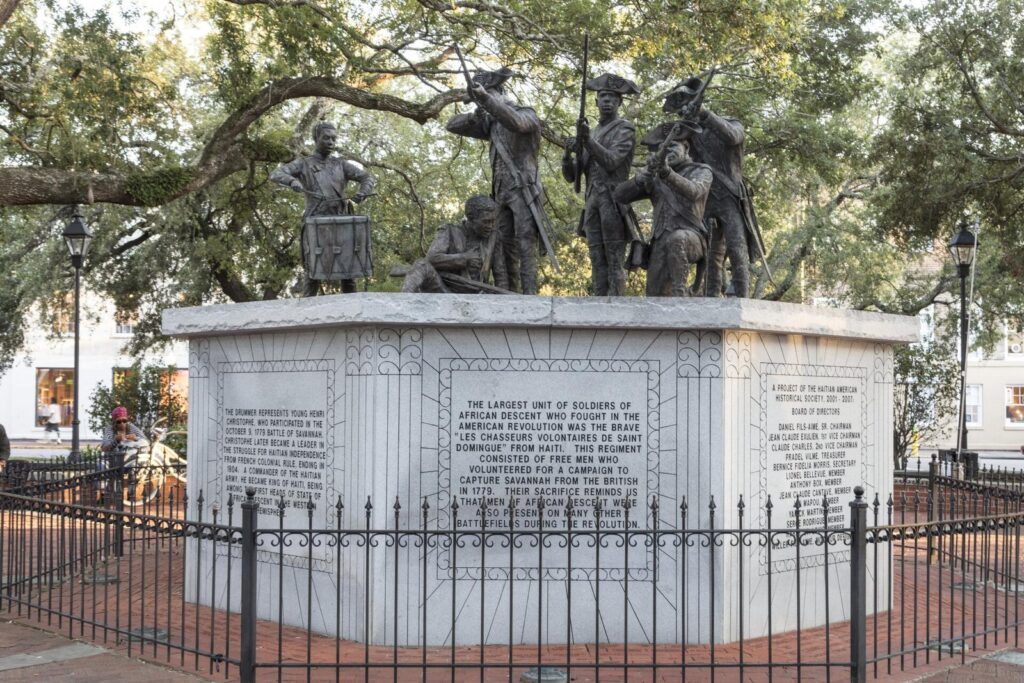
The allied force included a regiment of free men of color from Saint-Domingue, today’s Haiti, the Chasseurs-Volontaires de Saint-Domingue. The monument to them in Franklin Square calls them the largest unit of soldiers of African descent to fight in the American Revolution. Pulaski has his own monument in Monterey Square, and Jasper’s stands in Madison Square, both on Bull Street.
The British held Savannah for most of the rest of the war. Afterward it became Georgia’s first state capital, a role it gave up to Augusta in 1786.
Cotton, Fire and Fever: Savannah Before the Civil War
The invention that remade Savannah happened just outside it. In 1793, at Mulberry Grove plantation, Eli Whitney perfected a cotton gin that could strip the seeds from short-staple cotton, the kind that grows inland. Upland cotton became profitable across the South almost overnight, and Savannah became one of the ports that shipped it. By 1820 it was the 18th-largest city in the United States.
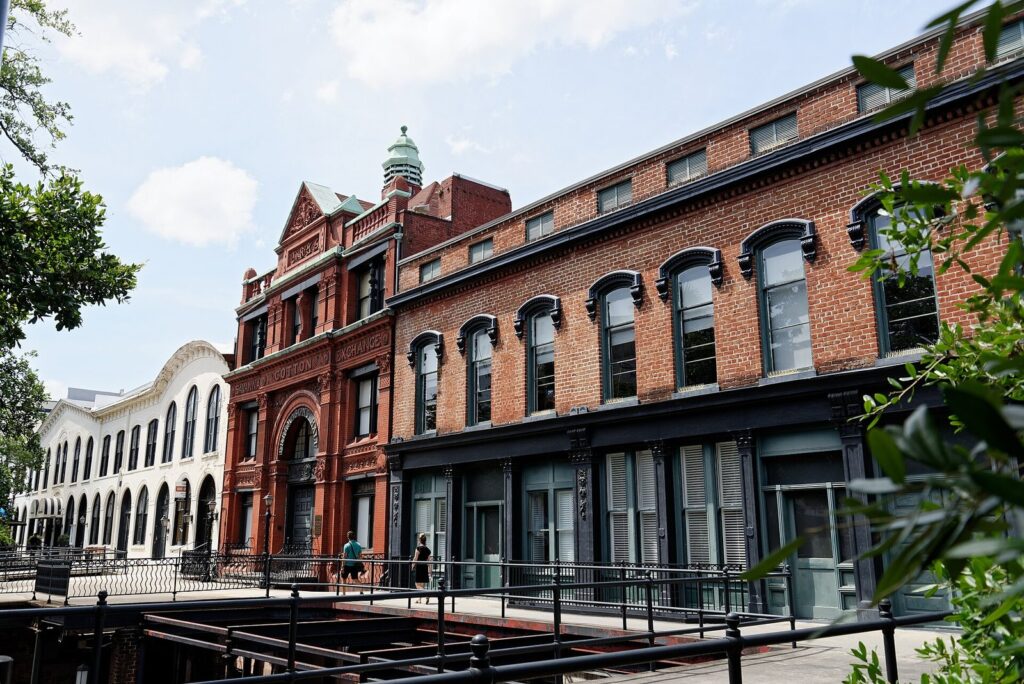
It was a dangerous place to live. Fires in 1796 and 1820 destroyed much of the commercial district, and yellow fever killed more than 700 people in 1820 and slightly more than 1,000 in 1854. Many of the buildings visitors admire today went up after those fires, often in brick, and the wealth that paid for them came from cotton. That wealth built the Davenport House in 1820, the Owens-Thomas House, designed by the English architect William Jay, and the grand houses on the squares further south.
The riverfront shows the business side. Factors Walk, the iron bridges and lanes along the bluff above River Street, is named for the cotton factors, the merchants who brokered the crop. The old warehouses below are shops and restaurants now, but their stone ramps and cobblestones were built for freight, not strolling.
Slavery in Savannah
Every part of this prosperity rested on slavery. Once the Trustees lifted the ban in 1750, enslaved Africans and African Americans did the work that made the port and the plantations rich: clearing and working the rice fields along the Savannah River, loading ships, building houses and cooking and cleaning inside them. The 1860 census counted 7,712 enslaved people in Savannah, alongside 14,580 free residents, 705 of whom were free Black people. About one person in three living in the city was enslaved.
The most notorious event in this history happened here. On March 2 and 3, 1859, Pierce Mease Butler sold about 436 enslaved men, women and children at the Ten Broeck Race Course outside Savannah to pay his debts. It was the largest recorded slave sale in American history, and rain fell through both days. It came to be remembered as the Weeping Time. Families were broken apart and sold away. The City of Savannah and the Georgia Historical Society placed a marker near the site in 2008; the sale ground itself now lies under later development.
If you want to see how slavery shaped daily life in the city, rather than read about it, go to the Owens-Thomas House & Slave Quarters. Telfair Museums puts the enslaved people who lived and worked there in the name of the site itself, and the visit takes in the slave quarters as well as the main house.
Plan it: Guided tours run about every 15 minutes from 10am to 3:30pm, Tuesday to Sunday, with tour times assigned first come, first served at check-in. A $30 Telfair ticket covers the Owens-Thomas House, the Telfair Academy and the Jepson Center for seven days. Allow 45-60 minutes. The house has original staircases and no elevator.
The other essential stop is First African Baptist Church on Franklin Square, home to one of the country’s historic Black congregations.
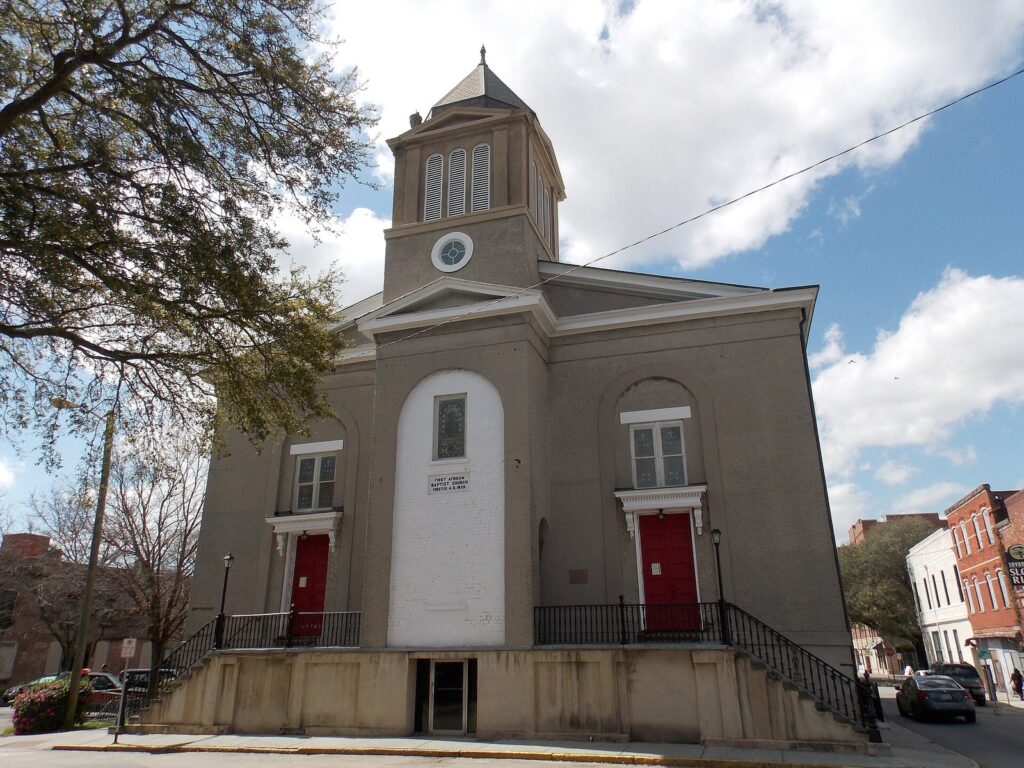
Plan it: History tours run Monday to Saturday at 1pm only. Adults $15; seniors, military and students $12. Arrive 10 minutes early. Tours can be canceled for church activities, and refunds are given only if the church cancels.
The Civil War and Sherman’s “Christmas Gift”
Savannah’s Civil War began at the mouth of the river. Fort Pulaski, built between 1829 and 1847 to guard the approach, was seized by Confederate forces in early 1861. In April 1862, Union rifled cannon battered its brick walls from across the water, and the fort surrendered. The lesson, that masonry forts could no longer stand up to modern artillery, was noted by military engineers everywhere. The Union then held the river mouth and the Confederate city upstream was cut off from the sea.
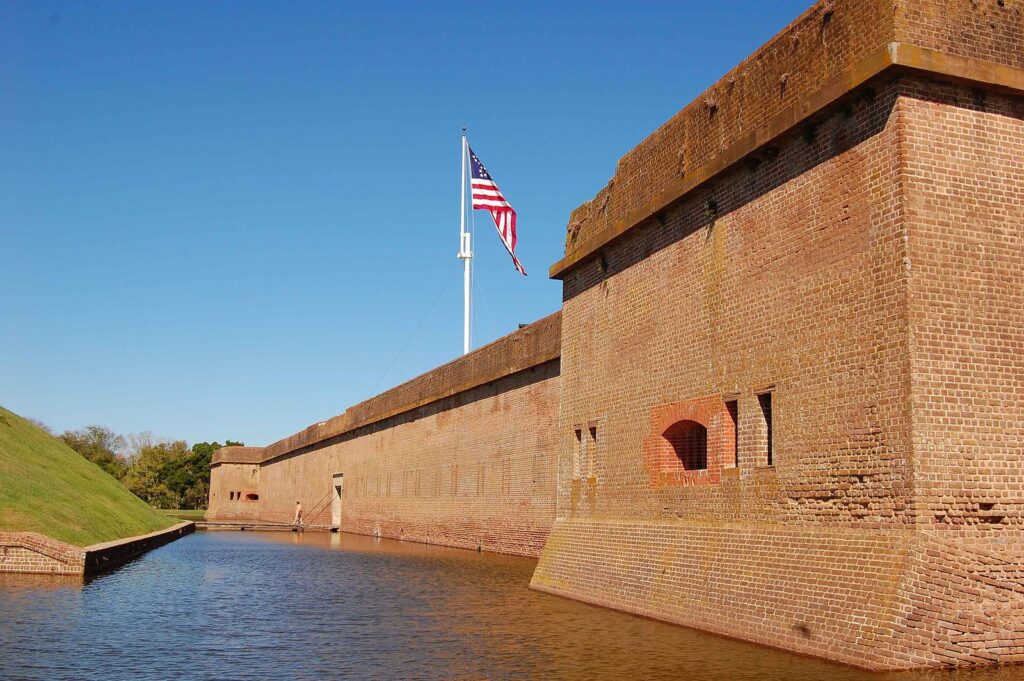
Plan it: Fort Pulaski National Monument is about 15 miles east of Savannah on US 80, on the way to Tybee Island. Entrance is $10 per person aged 16 and up, valid for seven days, and card only. The fort is open 9am-4:30pm and the visitor center 9am-5pm. Allow two to three hours.
The end came from inland. After the March to the Sea, General William T. Sherman’s army reached Savannah in December 1864. Confederate troops slipped out across the river into South Carolina, the city surrendered, and on December 22 Sherman telegraphed Lincoln: “I beg to present you as a Christmas gift the city of Savannah.” The message went on to list 150 heavy guns, plenty of ammunition and about 25,000 bales of cotton.
You’ll often hear that Sherman spared Savannah because it was too beautiful to burn. That’s a story, not a documented motive. What the record shows is simpler: the city was surrendered rather than defended, so there was no battle for its streets.
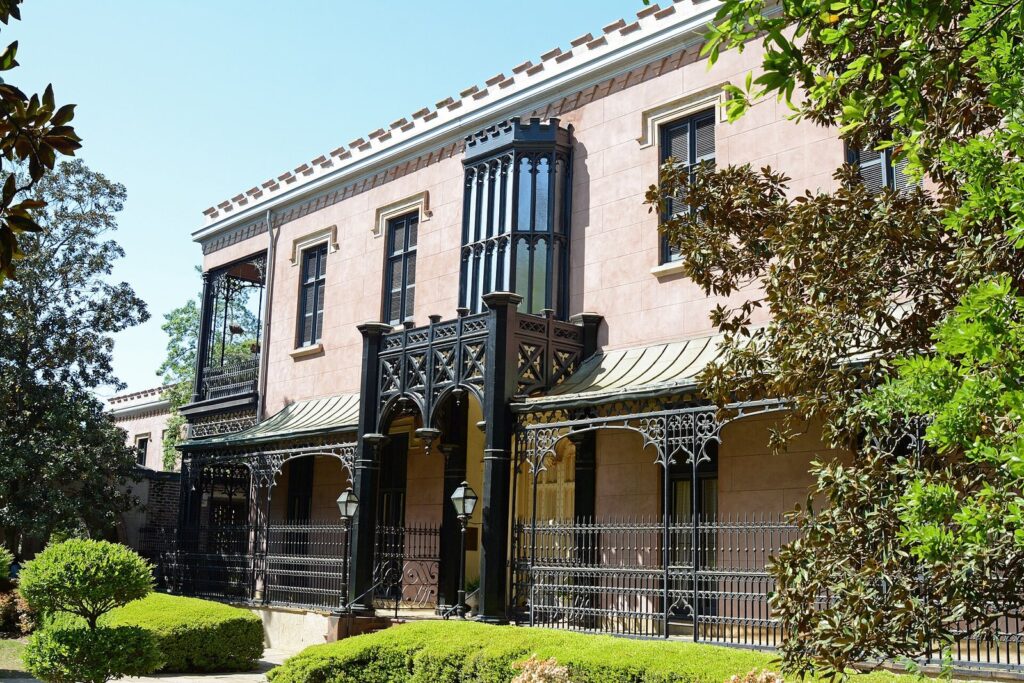
What happened next matters more than the telegram. Sherman made his headquarters in Charles Green’s Gothic Revival house on Madison Square. There, on January 12, 1865, he and Secretary of War Edwin Stanton met 20 leaders of Savannah’s Black Baptist and Methodist churches. Their spokesman, Garrison Frazier, a 67-year-old minister, told them what freedom would require: freedom from domination, education and, above all, land. Four days later, Sherman issued Special Field Order No. 15, setting aside Sea Island and coastal land for freed families in plots of up to 40 acres. That order is where the phrase “40 acres” comes from. The promise proved short-lived: later in 1865 President Andrew Johnson reversed the policy, and most of the land went back to its former owners.
Freedom, Reconstruction and Jim Crow
After the war, thousands of freed people moved into Savannah, building churches, schools and neighborhoods of their own. A public school for Black students opened in 1878, and in 1890 the Georgia State Industrial College opened; it’s now Savannah State University. The gains of Reconstruction were followed by decades of segregation laws and disenfranchisement, the Jim Crow system that the city’s civil rights movement would eventually take apart.
The economy had its own troubles. In the 1920s the boll weevil devastated the Southern cotton industry, and the port turned to new trades such as paper pulp and food processing. Downtown slid into a long decline, which may have helped more of it survive than in richer cities: in lean years, fewer owners could afford to tear old buildings down and replace them.
The Civil Rights Movement in Savannah
Savannah’s movement began early and was built patiently. The New Georgia Encyclopedia calls Ralph Mark Gilbert the father of the Savannah civil rights campaign. He led voter registration drives, and in 1947 the city’s police department was integrated. The movement’s best-known organizer was W. W. Law, a mail carrier for more than 40 years who led the local NAACP branch from 1950 to 1976.
On March 16, 1960, Carolyn Quilloin, a member of the NAACP Youth Council, was arrested for asking to be served at the Azalea Room lunch counter in Levy’s department store. Sit-ins at the Kress and Woolworth’s lunch counters followed, along with wade-ins at Tybee’s segregated beach. Then came the campaign that did the most damage: an 18-month boycott of the merchants on Broughton Street, which forced concessions. When you shop on Broughton Street today, you’re walking the street Savannah’s Black residents refused to spend money on for a year and a half. A 1962 lawsuit led the Fifth Circuit Court of Appeals to order Savannah’s public schools desegregated in 1964. Hosea Williams, Earl T. Shinhoster and Mercedes Arnold were among the movement’s other leaders, and its strategy was nonviolent protest.
Law spent his later years making sure the history was kept. He founded the Ralph Mark Gilbert Civil Rights Museum, the Negro Heritage Trail Tour, the King-Tisdell Cottage museum and the Beach Institute of African American Culture.
Plan it: The Ralph Mark Gilbert Civil Rights Museum is open Tuesday to Saturday, 10am-5pm, with the last tour at 3:30pm. Adults $15, seniors $8, students $7; individual tickets are card only. Groups call 912-777-6099.
Gullah Geechee Heritage
Along the coast from the Carolinas to Florida, the descendants of enslaved West and Central Africans kept a culture of their own: the Gullah Geechee, with a distinct creole language, foodways, crafts and faith traditions. Congress recognized that heritage with the Gullah Geechee Cultural Heritage Corridor, managed with the National Park Service. Around Savannah, the place to understand it is Pin Point.
Pin Point was established in the 1890s by formerly enslaved African Americans and their descendants, on the marsh near the Moon River. For decades, many residents worked at the A.S. Varn & Son oyster and crab factory, and that factory is now the Pin Point Heritage Museum, run by the Coastal Heritage Society. Its exhibits tell the community’s story through its residents, covering religion, language, food and work. Pin Point is also where Supreme Court Justice Clarence Thomas was born.
Plan it: Thursday to Saturday only, 9am-4pm, with guided tours at 10am, noon and 2pm. Adults $15, children 3-12 $7. The address is 9924 Pin Point Avenue, outside the city center, so you’ll need a car or a ride.
Jewish and Irish Savannah
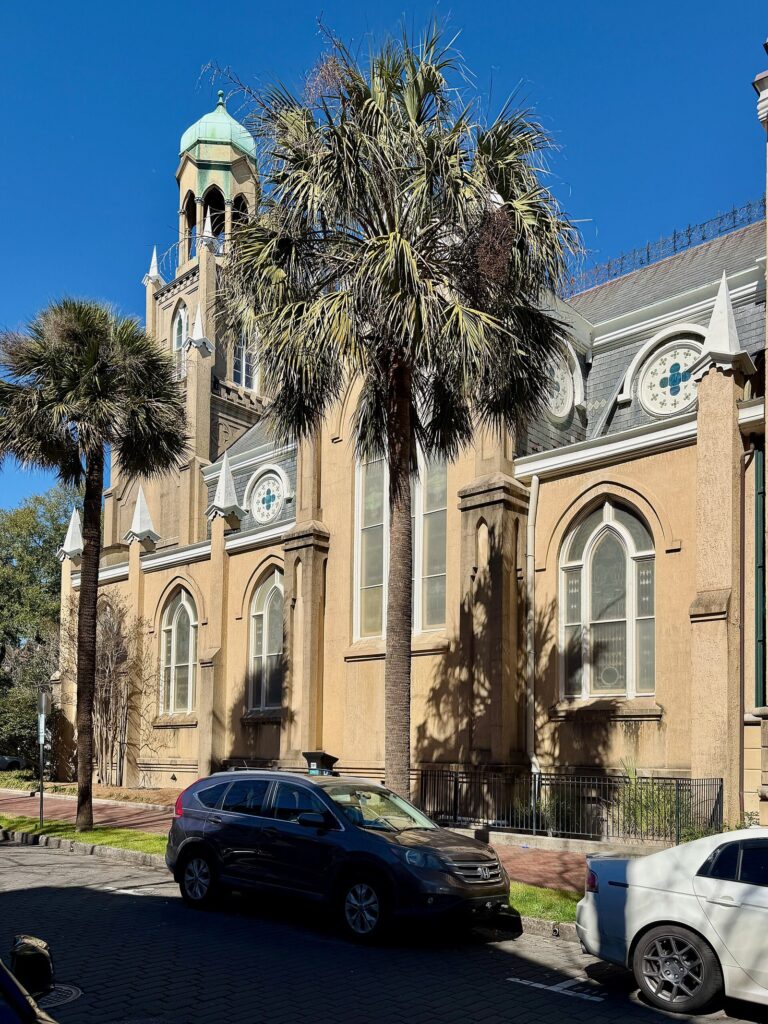
Jewish settlers arrived in Savannah in the summer of 1733, just months after the colony began, and founded Congregation Mickve Israel, one of the oldest Jewish congregations in the United States. Its Gothic Revival synagogue stands on Monterey Square, and the congregation offers guided tours of the sanctuary and its museum; check its website for current tour times.
Catholics, barred until 1748, came to shape the city too, and Irish immigrants, many of them Catholic, became a major part of its population in the 1800s. The Cathedral Basilica of St. John the Baptist, named a minor basilica by Pope Francis in 2020, is the landmark of that story, and the St. Patrick’s Day parade is its loudest living expression. For parade dates and planning, see our guide to Savannah’s events and festivals.
The 20th Century: Girl Scouts, Decline and the Birth of Preservation
In 1912, Juliette Gordon Low founded the Girl Scouts in Savannah, and her birthplace on Oglethorpe Avenue is now a museum run by the organization.
Plan it: Adults $15; seniors, military and students 5-21 $12. Buy online in advance, especially for June, July and school holidays, when tours sell out. Allow at least an hour. The birthplace’s own pages disagree on opening days, so confirm by phone at 912-233-4501.
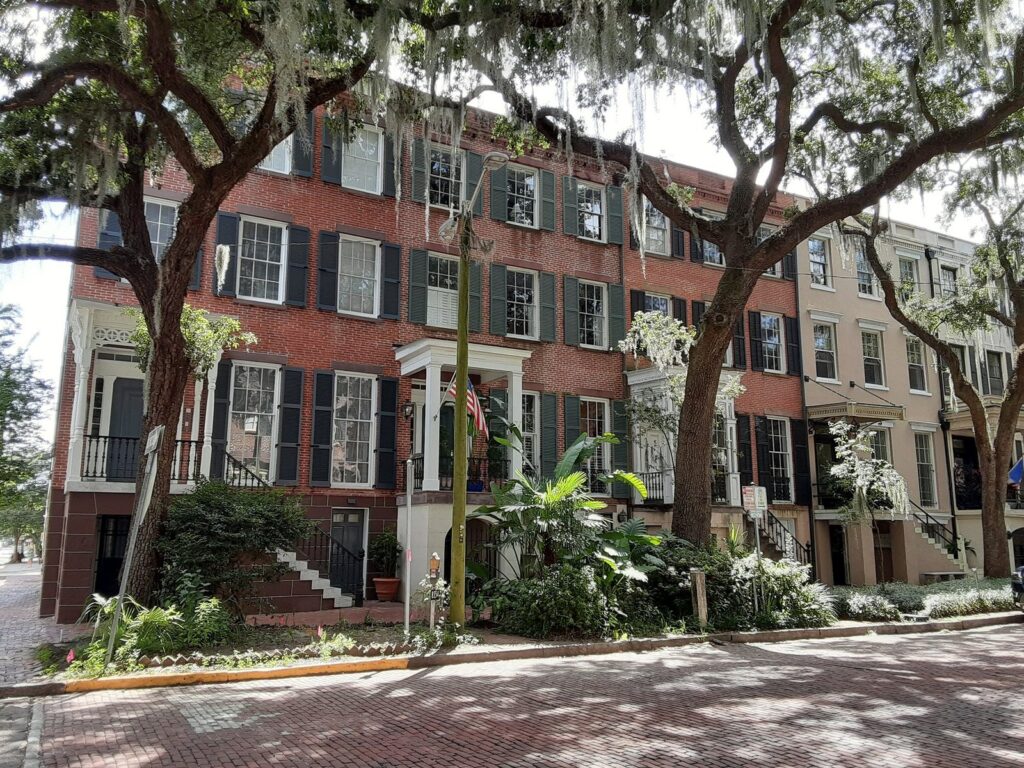
By the middle of the century, downtown Savannah was in trouble. Old buildings were being lost to parking and new construction, and the demolition of the City Market in the 1950s showed how much could vanish. When the 1820 Davenport House was threatened, a group of women led by Anna C. Hunter stepped in and saved it, founding the Historic Savannah Foundation in 1955. That was the beginning of one of the largest community preservation efforts in the country. In 1966 downtown Savannah was designated a National Historic Landmark District.
The Savannah College of Art and Design, which opened in 1979, gave the effort a second wind. It has since filled many historic buildings with classrooms and studios, and by 2004 it had become the largest art and design school in the country.
Plan it: The Davenport House runs timed tours of up to 15 people, 60-70 minutes long, Monday to Saturday; book a specific time. Adults $15. Check in at the Historic Kennedy Pharmacy at East Broughton and Habersham streets. The house has three sets of curved stairs and no elevator.
Midnight, Movies and the Modern City
In 1994 John Berendt published Midnight in the Garden of Good and Evil, a nonfiction account of a Savannah murder case and the city’s eccentrics that became a New York Times best-seller and then a film shot on location here. Tourism boomed: more than 50 million people visited Savannah during the 1990s. The house at the center of the book, the Mercer Williams House on Monterey Square, is open for tours, and the Bird Girl statue from the book’s cover is now inside the Telfair Academy.
Plan it: Mercer Williams House tours leave every 20-40 minutes, last about 35 minutes and are first come, first served. Adults $14.95 plus tax.
Today the city of Savannah has about 148,000 people (147,780 in the 2020 census), with about 405,000 in the three-county metro area, and its port ranks among the busiest container ports in the country. The Savannah History Museum is the best single place to start: it covers everything from the founding to the Forrest Gump bench.
Reading the Buildings
You don’t need an architecture degree to date most of downtown. The main styles, in rough order:
| Style | Look for | Example |
|---|---|---|
| Georgian | Symmetrical fronts, simple brick or stucco, a central door | The mansion built in 1771 that now houses The Olde Pink House, on Reynolds Square |
| Federal | Fanlights over doors, delicate trim, restrained brick | Davenport House (1820) |
| Regency | Stucco, curves, English refinement | Owens-Thomas House, by William Jay |
| Greek Revival | Columns, heavy cornices, temple-like porches | Houses across the central wards |
| Gothic Revival | Pointed arches, battlements, church-like detail | Green-Meldrim House; Mickve Israel’s synagogue |
| Victorian | Wooden porches, towers, decorative trim | The Victorian District, south of Gwinnett Street |
Who Keeps Savannah’s History
Much of the reliable record comes from a handful of institutions, and knowing them helps you judge what you read on a plaque or hear on a tour.
- The Georgia Historical Society runs the state’s historical marker program, including the markers for the Weeping Time and Special Field Order No. 15, and keeps its research library in Savannah.
- The New Georgia Encyclopedia, published online by Georgia Humanities, is the best free overview, with signed articles by historians.
- The Coastal Heritage Society runs the Savannah History Museum, the Georgia State Railroad Museum, Old Fort Jackson and the Pin Point Heritage Museum.
- Telfair Museums runs the Owens-Thomas House & Slave Quarters as well as the Telfair Academy and the Jepson Center.
- The Historic Savannah Foundation grew out of the fight to save the Davenport House, which it still operates as a museum.
- The National Park Service manages Fort Pulaski and partners on the Gullah Geechee Cultural Heritage Corridor.
- Congregations and community museums, from First African Baptist Church and Mickve Israel to the Ralph Mark Gilbert Civil Rights Museum and Pin Point, tell their own histories in their own voices. That’s often the most valuable part of a visit.
History or Legend? What You’ll Hear on Tour
Savannah is a city of storytellers, and the stories are part of the pleasure. It helps to know which ones are documented.
| You’ll hear | What the record shows |
|---|---|
| “Georgia was a colony for debtors.” | Partly true. The Trustees did promote it as a fresh start for England’s poor, debtors among them, but it was also a military buffer and a business venture. |
| “Sherman spared Savannah because it was too beautiful to burn.” | A story. The city surrendered without a fight, so there was nothing to burn it over. |
| “Oglethorpe and Tomochichi were close friends.” | They respected each other, but theirs was a diplomatic partnership with interests on both sides. |
| “Savannah is America’s most haunted city.” | A marketing line. Ghost stories are stories. The epidemics, fires and slavery behind many of them are documented history. |
For the tours that handle this well, including history walks led by public historians and tours focused on African American heritage, see our guide to the best Savannah tours.
How to Explore Savannah’s History in Two or Three Days
The hardest part of a history trip here is the calendar, not the distances. Several key sites keep limited days. The Pin Point Heritage Museum opens Thursday to Saturday. The Ralph Mark Gilbert Civil Rights Museum opens Tuesday to Saturday. First African Baptist Church runs one tour a day, at 1pm, Monday to Saturday. Telfair’s museums close on Mondays. The only days you can reach all four are Thursday, Friday and Saturday, so plan around them.
- Day one, the colonial and antebellum city: start at the Savannah History Museum (open daily 9am-4pm), then walk the squares from the river south to Forsyth Park. Stop at the Haitian Monument in Franklin Square and the monuments on Bull Street, and end the afternoon at the Owens-Thomas House & Slave Quarters.
- Day two, Black history and civil rights: the Ralph Mark Gilbert Civil Rights Museum in the morning, First African Baptist Church at 1pm, and the Davenport House or Mickve Israel after that.
- Day three, outside downtown: Pin Point in the morning, then Wormsloe, the ruins of a colonial estate at the end of a 1.5-mile avenue of live oaks, and Fort Pulaski on your way to Tybee Island.
Passes can save money. The Coastal Heritage Society’s See 3 ticket ($30 for adults) covers any three of its sites, including the Savannah History Museum, Old Fort Jackson and Pin Point, for three days once used. The Pioneers in Preservation Pass ($36 plus tax) covers Ships of the Sea, the Davenport House and the Andrew Low House for seven days. For more ways to fill the days, our guide to Savannah’s top attractions ranks the sites, and our Savannah itinerary fits them into a trip.
Savannah History FAQ
When was Savannah founded?
On February 12, 1733, when James Oglethorpe and 114 colonists aboard the ship Anne landed at Yamacraw Bluff on the Savannah River. The land was home to the Yamacraw, led by Tomochichi, whose consent the colonists needed to settle. Savannah was the first town of the Georgia colony and later Georgia’s first state capital.
Why does Savannah have so many squares?
Because Oglethorpe’s town plan built each ward around a central square, with lots for public buildings and churches on two sides and homes on the other two. The city repeated the pattern as it grew. Twenty-four squares were built and 22 survive; Ellis Square was restored in 2010 after decades as a parking garage.
Did Sherman burn Savannah?
No. When Sherman’s army arrived in December 1864, Confederate troops withdrew across the river and the city surrendered, so there was no battle for it. On December 22 Sherman offered Savannah to Lincoln as a Christmas gift. The story that he spared it for its beauty is legend.
What was the Weeping Time?
The largest recorded sale of enslaved people in American history. On March 2 and 3, 1859, Pierce Mease Butler sold about 436 men, women and children at the Ten Broeck Race Course near Savannah to pay his debts, splitting families apart. A Georgia Historical Society marker stands near the site.
Where can I learn about Black history in Savannah?
Start with the Ralph Mark Gilbert Civil Rights Museum (Tuesday to Saturday), First African Baptist Church (tours at 1pm, Monday to Saturday), the Owens-Thomas House & Slave Quarters and the Pin Point Heritage Museum (Thursday to Saturday). Together they cover slavery, faith, Gullah Geechee culture and the civil rights movement.
Was Georgia founded as a debtors’ colony?
Partly. The Trustees promoted Georgia as a refuge where England’s poor, including debtors, could become small farmers. It was also a buffer protecting South Carolina from Spanish Florida and a commercial venture. The early rules, including the ban on slavery, were lifted within about twenty years.
Is Savannah the oldest city in Georgia?
Yes. Founded in 1733, Savannah was the colony’s first town and served as Georgia’s first state capital after the Revolution, until Augusta took over in 1786. Its downtown has been a National Historic Landmark District since 1966.
Related Savannah Guides
- Savannah Historic District Guide: the squares, one by one, and how to walk them.
- Savannah Attractions: the house museums, forts and sites ranked, with prices and hours.
- Best Savannah Tours: history walks, heritage tours and how to tell them from the ghost scripts.
- Savannah Itinerary: how to fit the history into two to four days.
- Tybee Island Travel Guide: the beach town past Fort Pulaski, and its lighthouse.
Sources and How We Checked
Facts, prices and hours were checked September 23, 2026. This guide is compiled from the historical institutions, museums and agencies listed below, not from other travel lists, and it doesn’t claim first-hand visits.
- New Georgia Encyclopedia: Savannah; W. W. Law (1923-2002)
- Georgia Historical Society markers: Largest Slave Sale in Georgia History; History of Emancipation: Special Field Orders No. 15
- National Park Service: Fort Pulaski National Monument fees; Fort Pulaski hours; Gullah Geechee Cultural Heritage Corridor; Savannah squares study
- Coastal Heritage Society: Pin Point Heritage Museum; hours and admission; See 3 ticket
- Museums and historic sites: Telfair Museums; First African Baptist Church tours; Ralph Mark Gilbert Civil Rights Museum; Davenport House; Juliette Gordon Low Birthplace; Mercer Williams House; Congregation Mickve Israel; Cathedral Basilica of St. John the Baptist; Wormsloe State Historic Site
- WTOC: Calhoun Square renamed Taylor Square; Cathedral named a minor basilica
Savannah Tourism Guide is an independent publication. We are not affiliated with Visit Savannah, the City of Savannah or any attraction listed here, and no one paid to be included.
Photo Credits
- Oglethorpe Monument, Chippewa Square: photo by Michael Rivera, Wikimedia Commons (CC BY-SA 4.0)
- Haitian Monument, Franklin Square: photo by Carol M. Highsmith, Wikimedia Commons (Public domain)
- Savannah Cotton Exchange: photo by Bubba73, Wikimedia Commons (CC BY-SA 3.0)
- First African Baptist Church: photo by Farragutful, Wikimedia Commons (CC BY-SA 4.0)
- Fort Pulaski: photo by Jud McCranie, Wikimedia Commons (CC BY 3.0)
- Green-Meldrim House: photo by Jud McCranie, Wikimedia Commons (CC BY-SA 4.0)
- Congregation Mickve Israel: photo by This picture has been taken by Oleg Yunakov. Contact e-mail: yunakovgmail.com. Image can be used in accordance with the terms of the СС-BY-SA license. Other photos can be seen here., Wikimedia Commons (CC BY-SA 4.0)
- Jones Street row houses: photo by JeffersonLH, Wikimedia Commons (CC BY-SA 4.0)